Companion planting yarrow successfully boils down to positioning these feathery perennials within 60cm of your vegetables and ornamentals, where their deep taproots mine nutrients while their flat-topped flowers draw in predatory wasps, hoverflies, and ladybirds that patrol your beds for aphids and caterpillars. I stumbled onto yarrow’s magic quite by accident three summers ago when a self-seeded clump appeared beside my struggling courgettes. Within a fortnight, the leaves looked healthier and the usual blackfly invasion never materialised. That chance observation sent me down a rabbit hole of research and experimentation with different companion planting methods and yarrow has earned permanent real estate in my vegetable patch ever since.
What makes yarrow so effective is its dual action. Below ground, those long taproots pull up potassium, phosphorus, and calcium from deep soil layers, making these nutrients available to shallow-rooted neighbours when yarrow leaves decompose. Above ground, the umbel-shaped blooms act as a beacon for beneficial insects. Chelsea Flower Show gold medallist Sarah Raven told me last spring that she considers yarrow one of her top three companion plants for integrated pest management, alongside calendula and alyssum. The beauty of yarrow is that it thrives in poor soil and requires almost no maintenance once established, making it ideal for those of us juggling busy schedules with our garden planning ideas.
Why Yarrow Makes an Exceptional Companion Plant
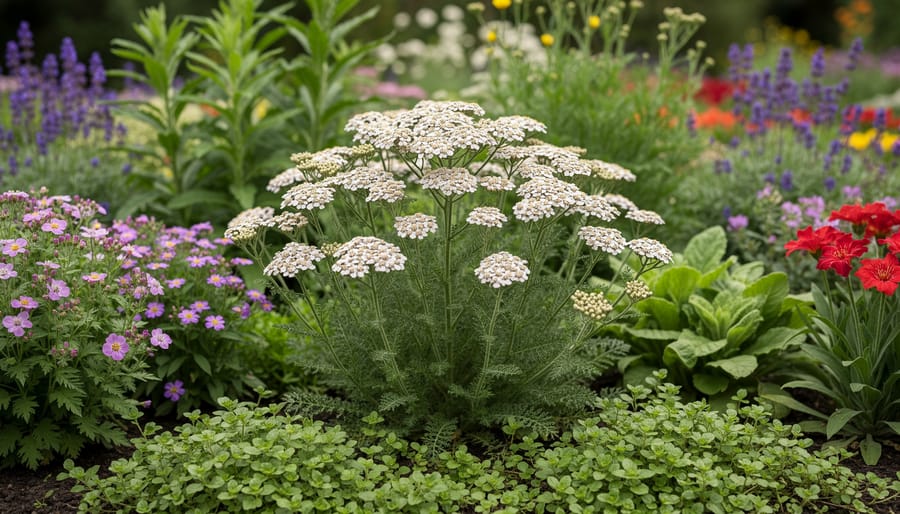
I’ve watched yarrow work quietly in my borders for years, but it wasn’t until I planted it deliberately alongside my brassicas that I truly grasped what an ally it could be. Within weeks, I spotted lacewings hovering around the feathery foliage, those delicate predators were making quick work of aphids that usually plagued my cabbages. That single observation shifted yarrow from decorative filler to strategic companion in my planning.
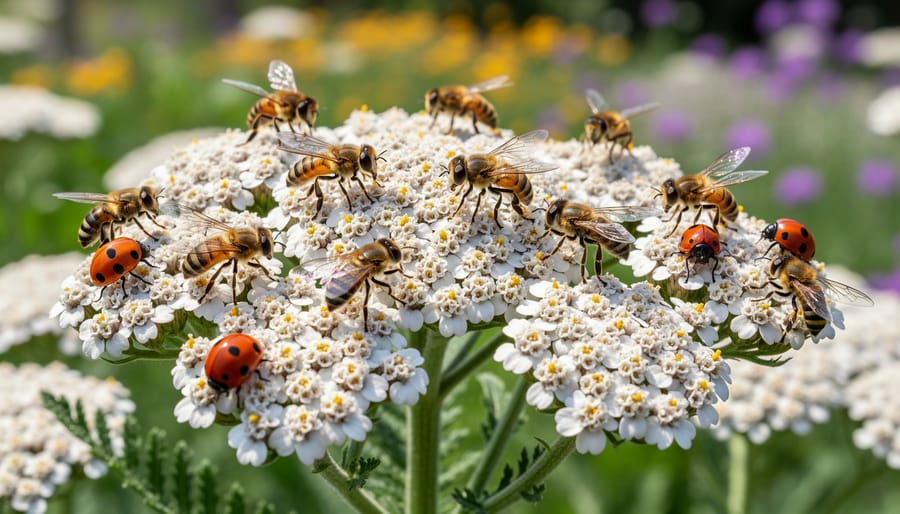
The plant’s real magic happens above and below ground simultaneously. Those flat-topped flower clusters, umbels, technically, act like landing pads for hoverflies, lacewings, and parasitic wasps. I’ve counted dozens of these beneficial insects on a single mature yarrow plant in July. They’re not just visiting for nectar; they’re setting up shop, laying eggs that hatch into larvae absolutely ravenous for aphids, caterpillars, and other soft-bodied pests troubling your vegetables.
Below the surface, yarrow’s deep roots improve soil structure whilst mining minerals, particularly potassium, phosphorus, and calcium, from depths most garden plants can’t reach. When yarrow leaves drop or you cut them back, those accumulated nutrients return to the topsoil, effectively making them available to companion plants with shallower root systems. I’ve noticed tomatoes planted near established yarrow clumps show stronger stems and better fruiting, which I attribute partly to this nutrient cycling.
Yarrow also tolerates our unpredictable British weather remarkably well. It’s sailed through waterlogged Februaries and baking Julys in my Midlands garden without complaint, maintaining its pest-deterring aromatic foliage through conditions that stress other companions. Some gardeners report it repels certain beetles and ants, though I’ve found its real value lies in creating a stable habitat for the good insects that do the heavy lifting of pest control.
What You’ll Need to Get Started
Setting up your yarrow companion planting doesn’t require specialist equipment or a huge budget. I’ve planted yarrow dozens of times using the same basic kit, and I’ve learned what you genuinely need versus what simply makes the job easier. Here’s everything you should gather before you begin:
- Yarrow plants (established) or seeds, your starting point
- Garden fork or spade, for soil preparation and planting holes
- Well-rotted compost or garden manure, to improve soil structure
- Watering can with a rose attachment, for gentle initial watering
- Mulch (bark chips, leaf mould, or compost), to suppress weeds and retain moisture
- Garden markers or labels (optional), helpful for tracking varieties
- Garden twine or stakes (optional), if planting tall varieties near delicate companions
The biggest decision you’ll face is whether to buy established plants or start from seed. I lean heavily toward plants for companion planting because they establish within weeks rather than months, giving your vegetables and flowers immediate benefits. Seeds cost less and offer wider variety choice, but they won’t deliver those pest-deterring and pollinator-attracting advantages until the following season.
For UK suppliers, I’ve had excellent results with Crocus and Beth Chatto’s nursery for established plants, while Chiltern Seeds stocks several yarrow varieties if you’re patient enough to grow from seed. Timing matters enormously with planting by season. For 2026, plant established yarrow between March and May or in September through October. Seeds need sowing in March or April under cover, then transplanting in late May once frosts have passed.
Important Considerations Before You Plant
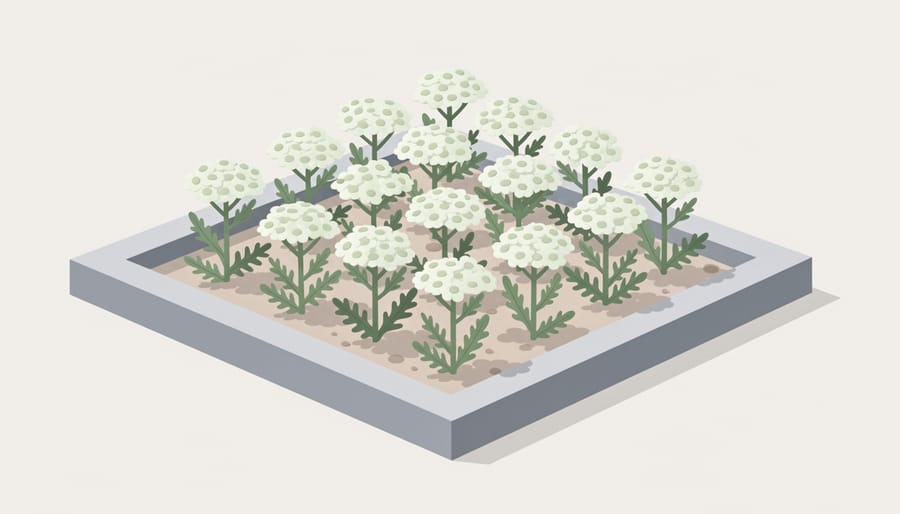
Before you start tucking yarrow into your garden beds, I need to share some important lessons I learned the hard way. In my second year growing yarrow, I discovered it had hopscotched across three separate beds, popping up between lettuces and nudging aside my carefully spaced beetroot. Yarrow’s enthusiasm for spreading, both through underground rhizomes and prolific self-seeding, makes it a brilliant companion in the right circumstances, but it requires forethought and occasional firm boundaries.
If you’re allergic to plants in the Asteraceae family (daisies, chrysanthemums, ragweed), handle yarrow with gloves. I’ve had readers contact me after developing contact dermatitis from deadheading yarrow barehanded, experiencing itchy rashes that lasted several days. The leaves and stems contain compounds that can irritate sensitive skin, particularly when you’re working with the plant in hot weather or breaking stems that release sap.
Yarrow thrives in well-drained, lean soil and full sun, conditions that don’t suit every vegetable. I avoid planting it near moisture-loving crops like celery, cucumbers, or lettuce that prefer rich, consistently damp soil. The yarrow invariably wins this mismatch, establishing deep roots that out-compete shallow-rooted vegetables for water during dry spells. Similarly, shade-tolerant plants growing under taller companions won’t appreciate yarrow’s preference for full sun.
In some UK counties, particularly in Scotland and parts of Wales, yarrow can naturalise too successfully in wild gardens and meadow edges, potentially displacing native wildflowers. Check your local biodiversity guidelines before planting near natural habitats or conservation areas.
Step-by-Step: Planting Yarrow with Companion Vegetables and Flowers
Choosing the Right Companions for Yarrow
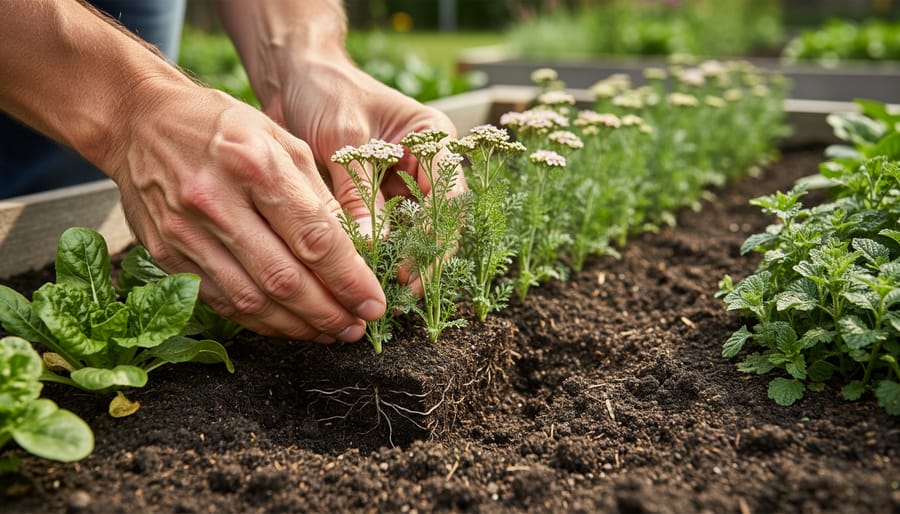
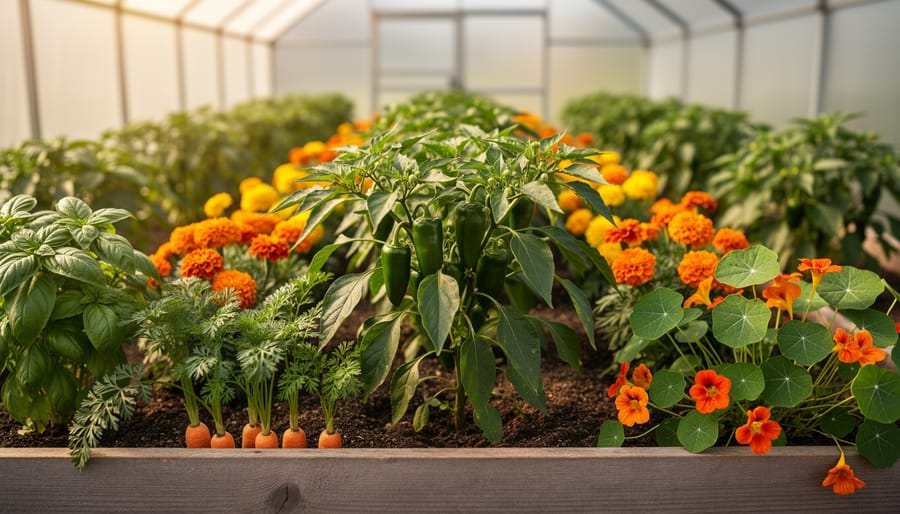
Last summer, I learned through trial and error which plants truly thrive alongside my yarrow. The brassicas, cabbages, kale, and Brussels sprouts, formed my most successful pairing. Yarrow’s umbrella-shaped flower heads attracted hoverflies whose larvae devoured the aphids that usually plague my cabbages. I planted yarrow clumps at 24-inch intervals along the bed edges, and the difference in pest pressure was remarkable.
Tomatoes benefit similarly. I positioned yarrow between tomato plants in my polytunnel entrance, drawing in predatory wasps that kept whitefly populations manageable. The yarrow never competed for nutrients because its deep roots mine different soil layers than tomato feeder roots.
For roses, I discovered these pairing tips work brilliantly: plant yarrow 18 inches from rose bases. The combination attracts lacewings whilst improving soil structure around rose roots. Apple and pear trees also appreciate yarrow planted in a circle beneath their canopy, where it draws pollinators during bloom.
Herbs like oregano and thyme make natural companions, sharing yarrow’s preference for well-drained soil and full sun.
Avoid pairing yarrow with moisture-loving plants like lettuce or celery, they have opposing water needs. I also keep yarrow away from beans and peas, which can become smothered by yarrow’s vigorous growth habit. Strategic placement matters: position yarrow upwind from vulnerable crops for pest deterrence, or centrally in beds purely for pollinator attraction.
Caring for Your Yarrow Companion Planting
Once your yarrow settles in, it’s remarkably low-maintenance, though a bit of attention keeps it playing nicely with its companions. For the first month after planting, I water whenever the top two inches of soil feel dry, usually twice weekly in warm weather. After that, yarrow’s deep roots make it genuinely drought-tolerant. I only water during extended dry spells, maybe once every ten days if we’ve had no rain. Overwatering actually weakens yarrow and encourages floppy growth.
Deadheading becomes your main management tool. I snip off spent flower heads before they set seed if I’m growing yarrow near well-behaved companions like lettuce or beans, this prevents aggressive self-seeding that could overwhelm neighbours. But when I want more pollinator activity around my tomatoes, I leave some flowers to mature and attract even more beneficial insects. It’s about reading your garden’s needs.
Every three to four years, my yarrow clumps get congested and flowering drops off. That’s when I dig them up in early spring, split the clumps into fist-sized sections with a sharp spade, and replant the healthiest portions. This rejuvenates the plant and lets me spread companions to new areas. For taller varieties near low-growing companions, I trim stems back by a third in late May to keep them bushier and prevent shading.
Yarrow handles UK winters brilliantly. I cut the foliage down to ground level in November as part of general UK seasonal care leaving a thin mulch layer over the crowns in exposed spots. Come March, fresh ferny growth emerges without fuss, ready for another season of garden teamwork.
Verifying Success and Troubleshooting
Within a month of planting yarrow alongside my tomatoes and brassicas, I started noticing telltale signs that my companion strategy was working. Ladybirds appeared in numbers I hadn’t seen before, patrolling the leaves of my cabbages, and hoverflies danced between the yarrow flowers and my courgette blooms. That’s your first verification: an uptick in beneficial insect activity around your companion plants, particularly predatory species like lacewings, ladybirds, and parasitic wasps that yarrow attracts so reliably.
Beyond the insect life, watch your companion plants themselves. I’ve consistently observed stronger growth and darker foliage in vegetables planted near established yarrow clumps, likely due to the nutrients yarrow’s deep roots bring up and make available. Reduced pest damage is another clear indicator: my roses, historically plagued by aphids, showed far fewer infestations once yarrow settled in nearby.
On the troubleshooting front, the most common issue I’ve encountered is yarrow spreading too aggressively into the space of companion plants. If you notice this, don’t hesitate to slice through the root mass with a sharp spade and remove sections. Poor flowering usually signals either too much shade or overly rich soil, both easily corrected. If a companion plant shows signs of stress rather than improvement, consider whether they’re competing for water or whether your yarrow has become too dense, blocking airflow. Sometimes the best adjustment is simply increasing spacing or relocating one plant entirely. The garden tells you what it needs if you pay attention.
Expert Insights: A Conversation About Yarrow’s Role in the Garden
I caught up with Sarah Raven, the renowned garden writer and plantsman, over tea in her East Sussex garden last spring. As we walked past her thriving borders where yarrow wove through roses and vegetables alike, I asked about her long relationship with this unassuming herb.
“People underestimate yarrow terribly,” she told me, pausing beside a clump of white Achillea millefolium humming with hoverflies. “I’ve been using it strategically for nearly thirty years. The key is thinking about it as garden infrastructure, not just decoration.”
Sarah’s approach differs from mine. Where I’ve planted yarrow somewhat haphazardly, she treats it as a deliberate support system. “I always establish yarrow in my cutting garden eighteen months before I plant roses,” she explained. “By the time the roses go in, the yarrow’s deep roots have already started bringing up nutrients, and the beneficial insects have established territories. You’re creating an ecosystem, not just filling space.”
I asked about her most successful pairing. Without hesitation, she pointed to heritage tomatoes underplanted with golden yarrow. “Five years running, barely any aphids. The ladybirds colonise the yarrow first, then patrol the tomatoes. It’s like hiring garden security that pays for itself in flowers.”
Her final advice? “Don’t overthink placement. Yarrow’s forgiving. Plant it, watch what happens, then adjust next season.”
Common Questions About Companion Planting with Yarrow
Every week I receive emails from readers wrestling with the same yarrow questions, so let’s tackle the ones that come up most often.
Which yarrow variety works best for companion planting in UK gardens?
Common yarrow (Achillea millefolium) is your most reliable choice, it’s hardy, attracts the widest range of beneficial insects, and thrives in our climate. The native white-flowered form performs brilliantly, though cultivars like ‘Cerise Queen’ and ‘Paprika’ work equally well if you want colour.
Can I grow yarrow in containers for companion planting?
Yes, though it won’t spread as vigorously as in-ground plants. Use a container at least 30cm deep, and position it strategically near vegetables or roses that need pest protection. You’ll need to water more regularly and divide the plant every two years.
How quickly does yarrow establish as a companion plant?
From transplants, you’ll see active growth within two to three weeks, with beneficial insects visiting by midsummer. Seeds take longer, expect establishment by the second season. Once settled, yarrow becomes increasingly effective each year.
What if I’ve only got a tiny garden, will yarrow take over?
Plant it in a buried container (an old washing-up bowl with drainage holes works perfectly) or choose compact varieties like Achillea ‘Moonshine’. Regular deadheading before seeds form keeps spread in check, and you can always divide clumps to share with neighbours rather than letting them expand.
The invasiveness concern deserves addressing honestly. Yarrow can self-seed freely in ideal conditions, but it’s not remotely aggressive compared to bindweed or ground elder. I’ve found that simply cutting back flowering stems before they fully dry stops most spread, and any unwanted seedlings pull out easily when young. In heavier clay soils common across much of the UK, yarrow actually stays quite well-behaved, it’s in sandy, open ground where you’ll want to monitor it more carefully.
I’ve watched yarrow quietly transform corners of my garden over the past few seasons, and I’m still discovering new ways it supports the plants around it. Some summers it’s the lacewings hovering above the flowers that catch my attention. Other times I’ll notice how the tomatoes beside my yarrow patch seem sturdier, more resilient when aphids arrive. There’s something deeply satisfying about working with plants that do double duty like this, creating those small symbiotic relationships that make a garden feel more alive.
If you’re new to companion planting, yarrow offers a forgiving entry point. It doesn’t demand perfect conditions or constant fussing, yet it delivers genuine benefits once established. Start with one or two plants near vegetables or roses that struggle with pests, and observe what happens over the growing season. You might be surprised by the shifts you notice.
I’d genuinely love to hear how yarrow works in your garden. Does it attract different beneficial insects in your region? Have you discovered companion pairings that work particularly well, or combinations to avoid? Every garden teaches us something new, and your experiences might help another reader solve a problem they’ve been wrestling with. This holistic approach to gardening, where we let plants support each other rather than controlling everything ourselves, creates gardens that feel less like work and more like collaboration. That’s the kind of gardening that keeps me coming back, season after season.