I killed my first tomato plant within three weeks of buying it, and I’m fairly certain the lavender that followed didn’t last much longer. Both were in containers on my tiny London balcony, both victims of my enthusiastic overwatering and complete ignorance about drainage holes. If you’re standing in a garden centre right now, staring at rows of terracotta pots and wondering where to begin, I’ve been exactly where you are.
Container gardening transformed my relationship with growing things, but only after I stopped treating it like a simplified version of “real” gardening. It’s actually quite different. Plants living in pots rely entirely on you for water, nutrients, and space to grow. There’s no surrounding soil to buffer your mistakes or provide extra resources. That sounds daunting, but it’s also liberating. You control everything.
Beginners often fail because they choose plants they love rather than plants that suit their specific conditions. A sun-loving geranium won’t forgive a shady north-facing balcony, no matter how much you want it to thrive there.
This guide will walk you through the practical foundations: which containers actually work, how to match plants to your available light and space, and what those first crucial weeks of care look like in practice. I’ll share what I’ve learned from drowning tomatoes and from five years of trial and error on my own balcony. Container gardening isn’t complicated, but it does require understanding a few key principles before you fill your first pot with compost.
What’s Driving the Container Gardening Movement in 2026
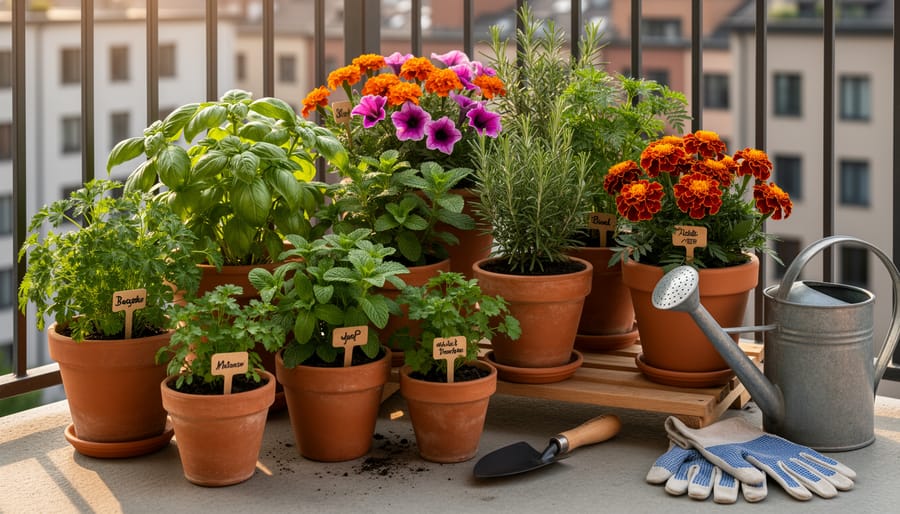
I’ve noticed something remarkable happening across Britain this spring. Container gardening, once viewed as a compromise for those without “proper” gardens, has become a deliberate choice for gardeners of all experience levels. Walk through any UK garden centre in 2026 and you’ll see the evidence: entire sections dedicated to containers, specialized composts flying off shelves, and queues at the till clutching pots in sizes I’d never have imagined selling five years ago.
The shift makes perfect sense when you consider how we’re living now. More of us inhabit flats, terraces, and homes with pocket-sized outdoor spaces where traditional beds simply won’t fit. But beyond the obvious space constraints, I’m seeing experienced gardeners, people with acres to spare, turning to containers for their adaptability. Climate unpredictability has made fixed borders frustrating; containers let you move tender plants under cover when frost threatens in May or shift sun-lovers to chase light as seasons change.
What’s particularly telling is how mainstream this has become. The Lake Simcoe South Master Gardeners recently ran a free workshop specifically for container gardening beginners, and similar events are popping up across the UK through horticultural societies and community groups. These aren’t fringe activities anymore. They’re packed sessions where newcomers learn alongside seasoned gardeners who’ve discovered containers solve problems they didn’t know they had.
There’s also an emotional component I can’t ignore. Container gardening offers immediate gratification and manageable scale, which matters when life feels overwhelming. You can start with three pots on a balcony, succeed or fail quickly, adjust, and feel genuinely accomplished within a single growing season. That accessibility has drawn people who might never have attempted traditional gardening, and honestly, that’s exactly what our gardens need.
Choosing Your First Containers: What Actually Works
Size Matters More Than You Think
I learned this lesson the hard way with basil. My first container was a charming 15cm pot, it looked perfect on the windowsill. The plant grew beautifully for three weeks, then suddenly stalled, the leaves small and pale despite regular feeding. When I finally tipped it out, the roots had formed a tight spiral, choking themselves.
Container size directly affects how often you’ll water and how well your plants grow. Small pots dry out in hours during summer, forcing you to water twice daily or watch things wilt. I now use 30cm pots as my minimum for tomatoes and courgettes, which gives roots room to spread and holds enough moisture to survive a day’s neglect. For herbs like rosemary or thyme, 20-25cm works well.
The rule I follow: if a plant looks cramped after one season, it needs a pot at least 5cm wider in diameter. My salvia collection taught me this, they sulked in anything smaller than 25cm but absolutely thrived when I moved them to 35cm containers. Root space isn’t just about survival; it’s about whether your plants merely exist or genuinely flourish.
The Drainage Debate
I killed my first lavender within a fortnight, and the culprit wasn’t neglect or poor light. It was a beautiful ceramic pot with no holes in the bottom. I’d assumed the layer of gravel I’d added would handle excess water, a misconception that costs beginners more plants than any other single mistake.
Here’s what I wish someone had told me: drainage holes aren’t optional, they’re essential. Roots sitting in waterlogged soil suffocate and rot, no matter how beautiful the pot. Every container needs at least one decent-sized hole, not just decorative dimples. I learned about proper container drainage after that expensive lavender lesson, and it changed everything.
If you’ve fallen for a gorgeous pot without drainage, you have two options: drill holes yourself (works for most materials except delicate ceramics) or use it as a decorative outer sleeve with a draining nursery pot inside. The double-pot method saved my relationship with several beautiful containers that would otherwise gather dust.
One more thing: covering drainage holes with broken crockery is traditional but unnecessary. Modern research shows it actually blocks drainage rather than improving it. Save yourself the faff and plant directly into quality compost.
Best Plants for Container Garden Beginners
Edibles That Thrive in Pots
I stumbled into edible container gardening by accident when I ran out of border space three years ago. That frustration turned into one of my happiest gardening discoveries, cherry tomatoes tumbling from hanging baskets, lettuces flourishing in window boxes, and herbs within arm’s reach of the kitchen door.
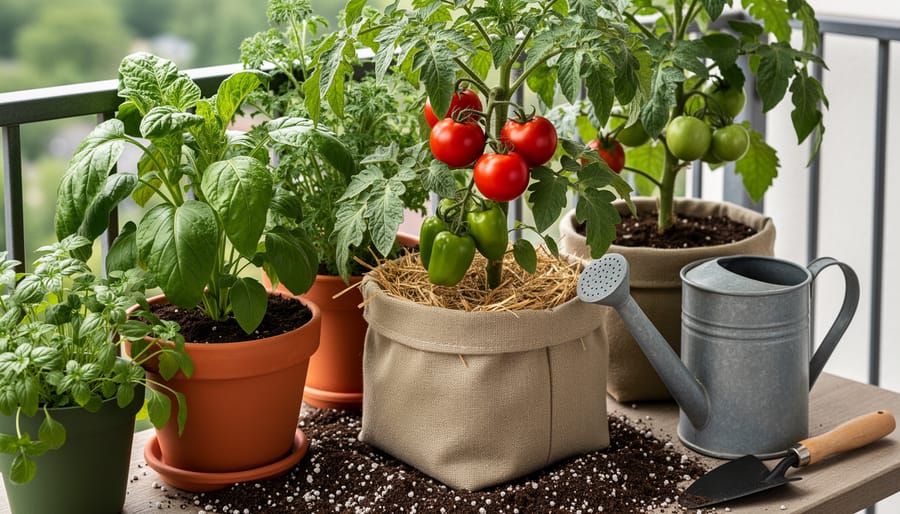
Tomatoes reign as my favorite container crop. ‘Tumbling Tom’ and ‘Gartenperle’ varieties need nothing more than a 30cm pot and regular watering to produce masses of sweet fruit from July through September. I grow mine in self-watering containers now after learning the hard way that holidays and heatwaves don’t mix well with conventional pots.
Lettuce varieties like ‘Little Gem’ and ‘Salad Bowl’ work brilliantly in shallow containers, and you can harvest outer leaves continuously rather than pulling whole plants. I tuck them into gaps between larger pots, creating edible mosaics across my patio.
Spring onions are perfect for beginners, far simpler than learning to deal with onion sets and regrow from kitchen scraps dropped into compost-filled containers.
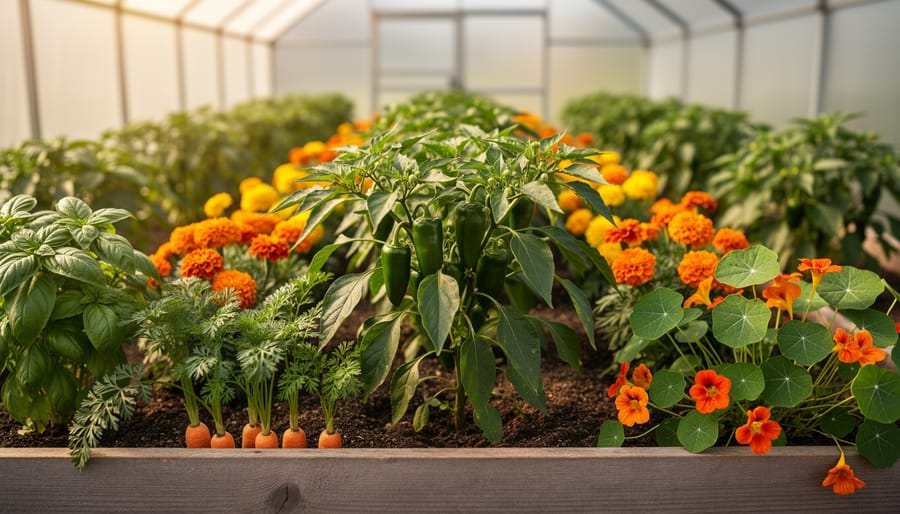
Herbs transform container gardens into fragrant, useful spaces. Basil, parsley, and chives practically grow themselves in pots, while mint positively demands container confinement before it colonizes your entire garden. I’ve learned to apply companion planting basics even in containers, pairing tomatoes with basil and carrots with chives for healthier, more productive plants.
Flowers That Forgive
I learned about forgiving flowers the year I went through a chaotic house move and neglected my pots for nearly three weeks. When I finally remembered them, half had died, but the geraniums were still blooming cheerfully as though nothing had happened.
Geraniums are genuinely indestructible. They handle dry spells, bounce back from overwatering, and flower for months without deadheading. I keep three or four pots of them simply because they make me look like a better gardener than I am.
Pansies and violas work brilliantly for cooler months, surviving frost and providing colour when everything else looks bleak. I’ve had winter pansies bloom straight through December into March with minimal attention.
For summer impact, begonias tolerate both sun and shade, while petunias forgive occasional drought and still cascade beautifully over pot edges. Nasturtiums practically grow themselves, self-seeding into cracks and producing edible flowers as a bonus.
The common thread among these plants is their ability to recover from neglect. They don’t sulk when you forget them for a few days, which gives beginners breathing room to learn proper watering rhythms without killing everything in the process.
Soil, Compost, and Getting the Mix Right
I spent my first summer convinced I was saving money by filling containers with soil from the garden. Each pot felt heavier than the last as I lugged them around the patio, and within weeks my tomatoes looked miserable, stunted, yellowing, barely growing. That’s when a neighbour gently explained why garden soil doesn’t work in pots. Garden soil compacts when confined, squeezing out the air pockets roots need to breathe. It holds too much moisture, creating boggy conditions even with drainage holes, and it’s often too heavy for container plants to thrive.
What you need instead is proper potting compost, light, fluffy, designed to retain moisture whilst maintaining air space. I started with basic multipurpose compost from the garden centre, which worked well for most plants. As I gained confidence, I experimented with custom mixes: adding perlite for extra drainage in terracotta pots, mixing in vermiculite for moisture retention in hanging baskets, even creating a perfect soil circle around specimen plants with layered components.
But here’s what took me years to accept: buying quality compost isn’t laziness. Peat-free options have improved dramatically, and a good commercial blend saves time whilst delivering consistent results. I now reserve custom mixing for specific needs, succulents get extra grit, ericaceous plants get specialist compost, and use reliable branded multipurpose for everything else.
The golden rule I wish someone had told me? Refresh your compost annually. Nutrients deplete, structure breaks down, and pathogens accumulate. Each spring I tip out last year’s compost onto borders, wash the pots, and start fresh. It sounds wasteful until you see the difference in plant vigour. That initial investment in proper compost returns itself many times over in healthier plants and fewer failures.
Watering Without Drowning or Drought
I killed my first three containers through misguided kindness. Every morning I’d water them, convinced I was being diligent, until the tomato leaves turned yellow and the basil stems went black at the base. Root rot taught me that more isn’t better.
The trick is sticking your finger two inches into the compost. If it’s dry at that depth, water. If it’s damp, leave it alone. I check mine before my morning coffee, which creates a natural rhythm and prevents the twice-daily overwatering that drowned those early attempts.
In March and April, I might water twice weekly. Come July, particularly when temperatures soar and I need to water in extreme heat my terracotta pots demand daily attention, sometimes twice on scorching afternoons. This is where I learned to group pots together creating a microclimate that reduces moisture loss and makes watering rounds more efficient.
Establishing a reliable routine took me a full season, but these steps now run on autopilot:
- Check moisture first thing each morning using the finger test, prioritizing smaller pots and terracotta which dry fastest.
- Water thoroughly until it runs from drainage holes, not just a token splash on the surface.
- Adjust frequency every few weeks as weather changes, adding evening checks during heat waves above 25°C.
- Before holidays, move containers to shadier spots and ask a neighbor to water every other day, or invest in a simple timer system.
For my neglected back courtyard pots, I switched to self-watering containers with built-in reservoirs. They’ve transformed my basil and lettuce yields because the plants draw moisture as needed rather than relying on my inconsistent schedule. Not suitable for Mediterranean herbs that prefer drier conditions, but brilliant for thirsty vegetables.
The game-changer was accepting that containers aren’t low-maintenance. They’re isolated ecosystems entirely dependent on you, which means flexibility beats rigid routines every time.
The Questions Every Beginner Asks
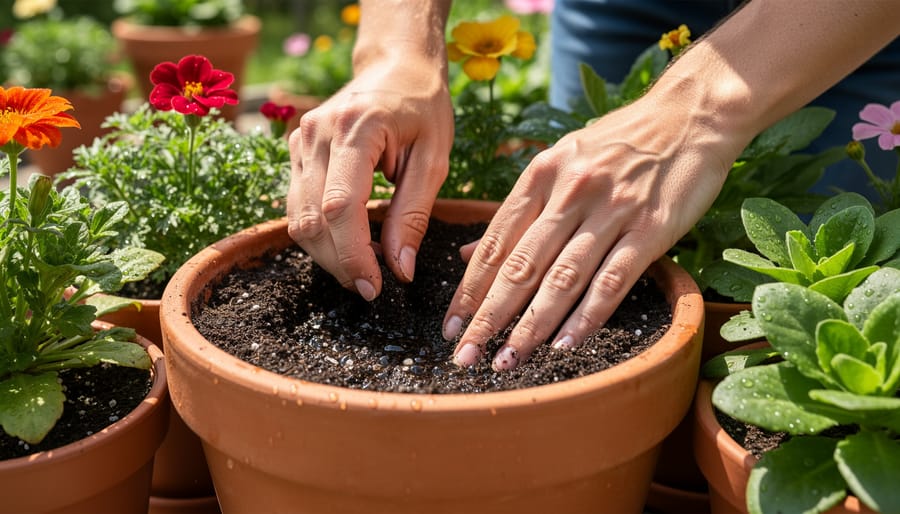
Container beginners tend to ask the same questions, week after week. The first is almost always about watering. People either drown their plants or let them wither. The fix is to stick a finger two inches into the soil. If it’s dry, water thoroughly until it drains out the bottom. If it’s damp, leave it alone. Simple advice, but it transforms results.
The Lake Simcoe South Master Gardeners offered a free workshop this past May specifically for container gardening beginners, and their registration filled quickly. That level of interest shows people want structured guidance, not just internet scrolling. The second most common question concerns fertilizing. Container plants can’t send roots searching for nutrients like garden plants do, so they exhaust their soil faster. Most pros recommend a liquid feed every fortnight during the growing season, diluted to half strength to avoid burning tender roots.
Beginners also often choose containers that look good but function poorly, picking a gorgeous pot with no drainage hole because it matches the patio furniture, then wondering why everything rots. Prioritize function first, aesthetics second, and drill holes yourself if necessary.
The consistent theme? Start with three pots, not thirty. Master those, learn what your specific space demands, then expand. That measured approach keeps frustration low and success rates high.
Troubleshooting Common Beginner Problems
I’ll never forget the morning I found my prize chilli plant looking like it had given up on life entirely. Yellowed, droopy leaves. Stunted growth. The compost somehow both soggy and crusty at the same time. That plant taught me more about container gardening than any book could.
The good news is that most container problems announce themselves clearly, and once you recognise the signs, solutions are straightforward. Here’s what I’ve learned from killing (and occasionally saving) plants over the years.
Yellowing leaves drove me mad until I understood they’re not one problem but several wearing the same disguise. Lower leaves turning yellow while upper growth stays green? That’s usually nitrogen deficiency, your plant has gobbled up the nutrients in that limited soil volume. I now feed my containers fortnightly during growing season with liquid seaweed fertiliser. If the whole plant looks pale and yellowish? Check your watering. I’ve done both, drowned plants until their roots rotted, and forgotten them until they resembled crisps.
- Root rot
- A fungal condition caused by waterlogged soil that prevents roots from accessing oxygen, leading to brown, mushy roots and wilting despite wet compost. Often fatal if not caught early.
- Nutrient deficiency
- When container plants exhaust available nutrients in their limited soil, showing symptoms like yellowing leaves, poor flowering, or stunted growth. Solved by regular feeding during the growing season.
- Pot-bound plants
- When roots have filled the entire container and circle the pot’s interior, restricting growth and water absorption. Requires repotting into a larger container or root pruning.
Leggy, stretched growth means your plant is desperately reaching for more light. I moved my basil from a north-facing step to a sunny spot and watched it transform from pale and spindly to bushy and vibrant within weeks.
For pests, check undersides of leaves weekly. I’ve battled aphids on my salvias by blasting them with water, then following up with diluted washing-up liquid spray. Slugs adore container gardens, I learned to check pots at dusk and remove the slimy beggars by hand, dropping them into soapy water. Not glamorous, but effective.
The real secret? Don’t panic when problems appear. Observe, adjust one thing at a time, and give your plant a week to respond. Most container gardening disasters unfold slowly enough that you can course-correct.
Looking back on my own container gardening journey, I’m struck by how much these pots have given me beyond fresh herbs and homegrown tomatoes. There’s something deeply restorative about tending a few containers on a balcony or patio, the mindful routine of checking soil moisture, the quiet satisfaction of watching seedlings emerge, the physical act of getting your hands dirty even when garden space is limited. Container gardening has become my meditation, my daily dose of outdoor time, and honestly, my reminder that growth takes patience.
If you’re reading this and thinking you might give it a go, my advice is simple: start with one pot, choose something forgiving, and expect to make mistakes. I’ve drowned basil, baked lettuces, and learned more from failures than successes. That’s the beauty of containers, they’re low-stakes experiments that teach you about plants, seasons, and yourself.
I’d love to hear how your container gardening adventures unfold. Share your triumphs, your wilted disasters, your questions about why that geranium looks sad, the Great Gardens UK community thrives on these real conversations. Whether you’re growing salvias in a sunny corner or attempting your first container vegetable patch, your experience matters. Connect with us, swap stories, and let’s celebrate what happens when we make space for plants, however small that space might be.