Aloe vera is a succulent plant whose thick, gel-filled leaves have been used for thousands of years to soothe burns, heal skin conditions, and support digestive health. If you’ve ever reached for that green bottle of after-sun gel on holiday, you’ve already met aloe in its most commercial form, but the living plant sat on your windowsill holds far greater potential than most people realise.
I first grew aloe vera by accident. A friend gave me a pup she’d separated from her overgrown mother plant, and I potted it up more out of politeness than enthusiasm. Within a month, I’d snapped off a leaf to treat a kitchen burn, and the speed at which my skin calmed was startling. That single experience sent me down a rabbit hole of research, conversations with herbalists, and plenty of trial and error in my own home.
What I’ve learned is that aloe vera straddles two worlds beautifully. It’s both a low-maintenance houseplant that tolerates the sort of benign neglect busy gardeners are prone to, and a genuine pharmacy in a pot. The same plant that purifies your indoor air can also be turned into a face mask, a hair treatment, or a gentle laxative. There’s a reason cultures from ancient Egypt to modern Korea have woven aloe into their wellness rituals.
This guide walks you through everything aloe vera offers in 2026, from the science behind its healing compounds to the dozens of ways you can use it at home. We’ll cover which varieties work best for different purposes, how to grow and harvest your own plant sustainably, and how aloe fits into the broader picture of weather and health benefits that come from nurturing plants indoors and out. Whether you’re after natural skincare, household remedies, or simply a forgiving green companion, aloe vera deserves a spot on your shelf.
What Aloe Vera Actually Is
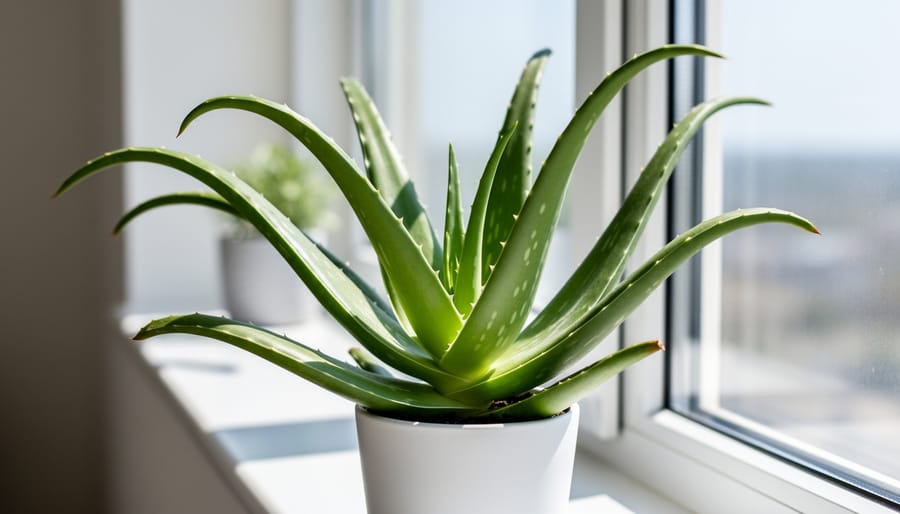
Aloe vera is a thick-leaved succulent plant that originated in the hot, arid climates of the Arabian Peninsula, though it now grows wild across tropical and subtropical regions worldwide. I first encountered one in my grandmother’s kitchen, where she kept a pot by the window and snapped off leaves to treat everything from cooking burns to my scraped knees. That modest plant belonged to the species Aloe barbadensis miller, which remains the most commonly cultivated variety for home medicinal use.
What makes aloe a succulent is its remarkable ability to store water in its leaves, allowing it to survive extended dry spells without withering. The leaves are lance-shaped, typically grey-green in colour, and grow in a rosette pattern from a central point. They’re surprisingly heavy when you pick them because of the moisture locked inside. Each leaf has a tough, waxy outer rind that seals in the precious gel, which is the plant’s water reserve and the part we harvest for practical use.
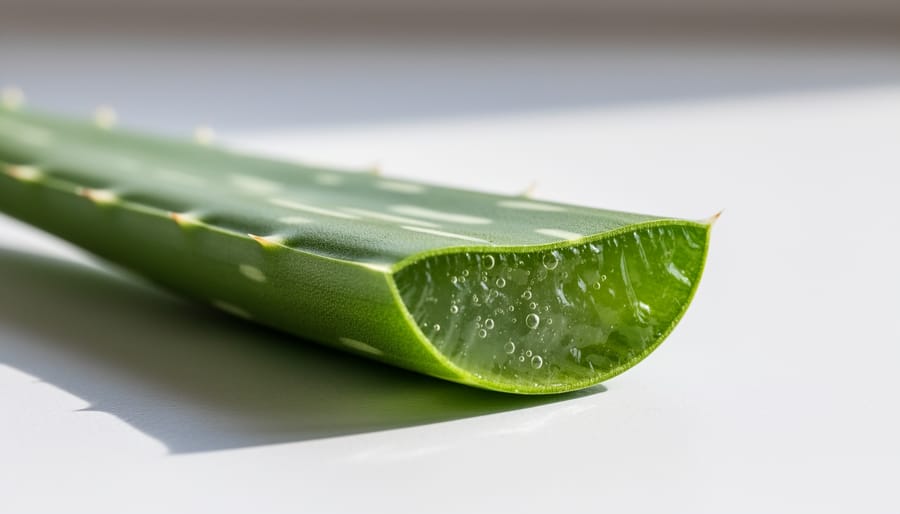
When you slice open an aloe leaf, you’ll notice three distinct layers, and understanding these makes all the difference when you’re using the plant:
- Gel
- The clear, thick inner substance that makes up the bulk of the leaf’s interior. This is the prized component containing vitamins, enzymes, and polysaccharides used for skin care and other applications.
- Latex
- A thin, yellowish layer found just beneath the outer rind. It contains aloin, a compound with strong laxative effects that can cause stomach irritation if ingested, which is why proper harvesting technique matters.
- Succulent
- Plants adapted to store water in their leaves, stems, or roots, allowing them to thrive in dry conditions with minimal watering.
- Aloe barbadensis miller
- The botanical name for common aloe vera, the species specifically cultivated for medicinal and household use rather than purely ornamental purposes.
While there are over 500 aloe species, Aloe barbadensis miller dominates home growing because it produces the most gel-rich leaves and has been extensively studied for safety and effectiveness. Other varieties might look striking in the garden, but they don’t offer the same practical benefits or reassurance that comes from centuries of documented human use.
How Aloe Vera Works
I’d been growing aloe vera for years before I truly understood why it worked so well on my sun-scorched arms after long garden days. That changed when I met Dr. Sarah Chen, a botanist specializing in succulents, at a Royal Horticultural Society talk. She sliced open an aloe leaf and walked us through what was actually happening inside those thick, fleshy leaves. What I learned that afternoon transformed my appreciation for this unassuming plant.
Aloe vera is essentially a desert survival machine. In its native arid habitats, the plant evolved to capture and store water in specialized cells within its leaves, creating that characteristic thick gel we’re familiar with. These cells don’t just hold water, though. They’re packed with a complex mixture of over 75 active compounds working together. The gel contains vitamins like A, C, and E, which act as antioxidants protecting cells from damage. There are enzymes that help break down sugars and fats, amino acids that serve as the building blocks for proteins, and polysaccharides like acemannan that have immune-supporting properties.
The magic happens when these compounds interact with our bodies. Those polysaccharides form a protective film on skin, locking in moisture while allowing oxygen to reach damaged tissue. The enzymes, particularly bradykinase, help reduce excessive inflammation and pain, which explains why a fresh slice of aloe soothes a burn so effectively. The bioactive constituents in Aloe also include salicylic acid, giving it mild antibacterial properties, and lignin, which helps other compounds penetrate deep into skin layers.
What fascinated me most was learning how the plant’s drought-survival adaptations directly translate to human benefits. The mucopolysaccharides that prevent water loss in the plant do exactly the same thing for our skin. The antioxidant vitamins protecting plant cells from harsh UV exposure offer similar protection when we apply the gel topically. When taken internally, those same compounds can coat the digestive tract, potentially soothing irritation much like they protect the plant’s internal structures.
This isn’t just clever chemistry. It’s millions of years of evolution creating a plant perfectly designed to hold and deliver exactly what damaged or stressed tissue needs.
Main Types and Varieties of Aloe
When I first started collecting aloe plants, I assumed they were all basically the same. One trip to a specialist nursery changed that. The owner walked me through rows of aloes ranging from miniature rosettes to tree-sized specimens, and I realized this genus offers far more variety than most gardeners expect.
The workhorse of the aloe world is Aloe barbadensis miller, commonly called Aloe vera. This is the variety you want if your priority is harvesting gel for burns, skin care, or digestive use. Its thick, pale green leaves yield generous amounts of clear, soothing gel, and it tolerates indoor living remarkably well. I keep one on my kitchen windowsill year-round, and it has survived my occasional neglect better than most houseplants.
For those seeking a more dramatic garden feature, Aloe arborescens (the krantz aloe) forms striking multi-headed clumps and produces vibrant red-orange flower spikes in winter. Its gel contains similar beneficial compounds to Aloe vera, though the leaves are narrower and the plant itself grows larger. In milder UK regions, particularly coastal areas, I’ve seen established clumps survive outdoors with minimal protection. Further north or inland, treat it as a container plant you bring inside before the first frost.
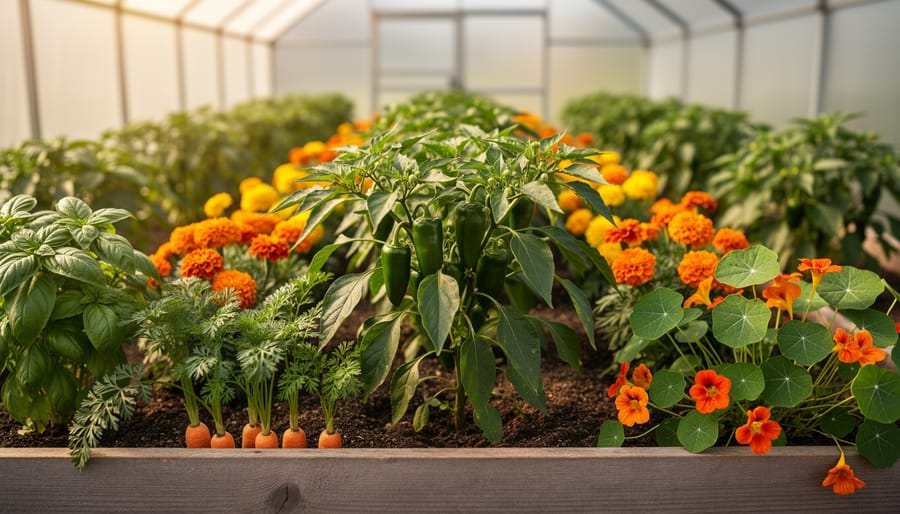
Aloe aristata, commonly called lace aloe or torch plant, earns its place through sheer charm rather than medicinal value. This compact species forms neat rosettes covered in white spots and soft spines, rarely exceeding 20 centimetres across. It handles cooler temperatures better than its cousins and makes an excellent choice for alpine troughs or mixed succulent displays. I pair mine with sedums and the occasional yarrow companion in outdoor containers during summer.
Here are the varieties I recommend based on your primary goal:
- Medicinal gel harvest: Aloe barbadensis miller (true Aloe vera)
- Ornamental garden centrepiece: Aloe arborescens (krantz aloe)
- Cold-hardy container plant: Aloe aristata (lace aloe)
- Indoor houseplant: Aloe barbadensis miller or compact hybrids
- Architectural statement: Aloe ferox (Cape aloe, for conservatories)
Cold-hardiness varies dramatically. True Aloe vera tolerates brief dips to around 0°C but suffers damage below that. Lace aloe handles -5°C if kept dry. The safest approach for most UK gardeners is treating aloes as fair-weather outdoor plants that holiday on the patio from May through September, then overwinter on a bright indoor windowsill. A south-facing conservatory or unheated porch works brilliantly for the transition period, giving plants time to acclimate without shock.
12 Everyday Uses for Aloe Vera
Skin Care and Minor Burns
I learned aloe’s skin-soothing power the hard way one July afternoon. After hours of weeding in full sun without my usual hat, my arms were angry red by evening. I snipped a thick aloe leaf from the pot on my kitchen windowsill, sliced it lengthwise, and scraped out the cool, clear gel. The relief was instant, that stinging heat melted away within minutes. Since then, fresh aloe has become my first reach for minor garden mishaps.
The gel works brilliantly on sunburn because those polysaccharides and enzymes reduce inflammation whilst creating a protective moisture barrier. It’s equally effective on small cuts from thorns, insect bites from afternoon gardening by seasons and the dry, cracked hands that come from soil work. I’ve even used it on nettle stings whilst out checking my companion planting beds.
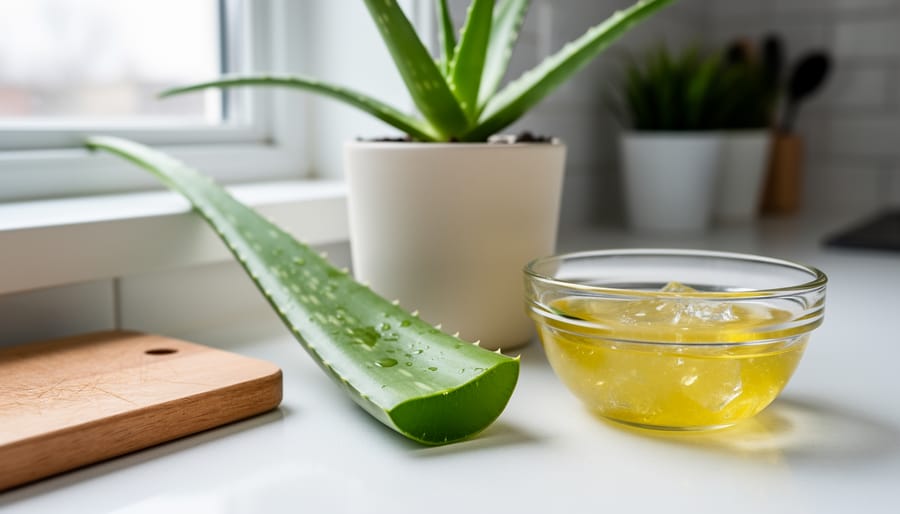
To harvest safely, choose a mature outer leaf and cut it cleanly at the base with a sharp knife. Rinse the leaf, then slice it open lengthwise. You’ll see translucent gel inside and sometimes a yellowish latex layer near the skin, avoid that bitter latex, as it can irritate. Scoop out only the clear gel with a spoon and apply it directly to clean skin. The leaf will seal itself and keep producing gel, so one plant goes a long way.
Hair and Scalp Treatments
I’d been battling an itchy, flaky scalp for weeks, partly down to overwashing after muddy garden days, when a hairdresser friend suggested trying fresh aloe gel. I was sceptical, but within two applications my scalp felt calmer and the flakes had noticeably reduced.
Aloe vera works brilliantly as a hair treatment because the same enzymes and polysaccharides that soothe skin also condition hair shafts and reduce scalp inflammation. The gel’s natural pH balance (around 4.5-5.5) closely matches healthy hair, making it gentler than many commercial products.
For a quick conditioner, I smooth fresh gel through damp hair after shampooing, leave it ten minutes, then rinse thoroughly. It adds shine without weighing hair down. As a scalp treatment for dandruff or irritation, massage the gel directly onto your scalp, leave twenty minutes, and wash out. The antibacterial and antifungal properties tackle the underlying causes of flaking.
Traditional Ayurvedic and Caribbean hair care has used aloe for centuries to promote growth and strengthen hair. Modern dermatology backs this up, studies show aloe’s proteolytic enzymes can repair dead skin cells on the scalp and improve follicle health. Just ensure you rinse well; any residue can feel sticky once hair dries.
Digestive Health
I first tried aloe juice after a friend in my gardening club swore it helped settle her stomach during a particularly stressful planting season. She’d been making it from her own plants for years, carefully processing the inner gel into a mild drink mixed with water and lemon.
Aloe vera juice, made from the clear inner gel, has traditionally been used to support digestion and soothe occasional stomach discomfort. The gel contains polysaccharides that may help maintain a healthy gut lining. However, this internal use differs vastly from slapping gel on a sunburn. The crucial distinction lies in what part of the plant you’re using.
The yellow latex layer just beneath the leaf skin contains aloin, a compound with strong laxative effects that can cause cramping and diarrhoea. Commercial aloe drinks are processed to remove this latex, but homemade preparations require meticulous filleting to avoid it entirely. I learned this the hard way after my first attempt left me decidedly uncomfortable.
Before trying aloe juice internally, consult your doctor, especially if you’re taking medications or have digestive conditions. What works as a gentle topical treatment becomes far more complex when consumed.
Natural Household Cleaner
I stumbled onto this use quite by accident when a bottle of aloe gel tipped over near my kitchen sink and left the stainless steel gleaming. Turns out aloe’s natural compounds give it genuine aloe vera antibacterial activity that works brilliantly for light household cleaning. My go-to recipe couldn’t be simpler: blend two tablespoons of fresh aloe gel with 500ml warm water, add a squeeze of lemon juice and a few drops of tea tree oil, then pour it into a spray bottle. It cuts through kitchen grease and leaves worktops fresh without harsh chemicals. The gel’s slightly sticky texture means you’ll want to wipe surfaces with a damp cloth afterward, but I’ve found it perfect for daily maintenance cleaning rather than heavy-duty scrubbing. Best of all, there’s no guilt when the mixture runs down the drain into my garden greywater system.
Plant Food and Growth Promoter
I stumbled onto this use quite by accident when a gardening friend mentioned she’d been dunking her rose cuttings in aloe gel instead of commercial rooting powder. Skeptical but curious, I tried it with some lavender cuttings the following week, and was genuinely surprised when they rooted faster than my usual batch.
Aloe vera gel contains salicylic acid and natural enzymes that can stimulate root development and protect cut stems from bacterial infection. To use it, simply coat the cut end of a fresh cutting in pure aloe gel before planting in your propagation medium. I find it works particularly well with soft-stemmed herbs and houseplants.
Beyond rooting, diluted aloe juice makes a gentle plant tonic. Mix one tablespoon of fresh aloe gel with a litre of water and use it to water seedlings or stressed plants. The polysaccharides and amino acids provide a mild nutrient boost without the harshness of synthetic fertilizers. A nursery owner in Devon told me she’s used this method for years on her young bedding plants, claiming it strengthens their resistance to transplant shock. I’ve adopted a monthly aloe-water routine for my indoor ferns, and they’ve never looked lusher.
Food Preservation
I stumbled across this use quite by accident while reading a university study, and it honestly surprised me. Researchers have found that coating fresh fruit and vegetables with a thin layer of aloe vera gel can significantly extend their shelf life, sometimes by several days or even weeks. The gel creates a protective barrier that slows moisture loss and limits microbial growth, essentially mimicking what commercial produce coatings do but without synthetic chemicals.
I tried it myself with strawberries and tomatoes from the garden. You simply dip clean produce in diluted aloe gel (about one part gel to three parts water), let it air-dry, then store as usual. The strawberries stayed firm and mould-free noticeably longer than the untreated batch. It’s not a miracle preservative, but for homegrown produce you want to enjoy over several days rather than all at once, it’s a clever trick that uses something you’re already growing.
Pet-Safe Applications
I discovered aloe’s pet-safe potential when my neighbour’s dog developed a minor hot spot last summer. She’d read that pure aloe gel could soothe irritated skin, but wisely checked with her vet first, crucial advice I’ll echo here.
For minor skin irritations, a small amount of fresh Aloe barbadensis gel can provide gentle relief when applied topically to areas your pet can’t immediately lick. Always consult your vet before trying this, particularly for cats, who metabolize compounds differently than dogs. Never let pets ingest aloe, as the latex layer contains compounds that cause digestive upset.
Keep all aloe plants out of reach. While the inner gel is generally safe for external use under guidance, the whole plant poses risks if chewed or eaten.
Growing Aloe Vera in the UK
I’ll be honest: my first attempt at growing aloe vera in the UK was a near-disaster. I’d seen those glossy magazine photos of thriving aloe plants basking in Mediterranean sunshine and assumed my south-facing windowsill would do the trick. Within weeks, the leaves turned brown and mushy. Turns out, British light levels and our damp climate need a different approach entirely.
The good news? Once I understood what aloe actually needs, it became one of the easiest plants in my collection. The key is mimicking its native desert conditions while accounting for our cooler, wetter reality.
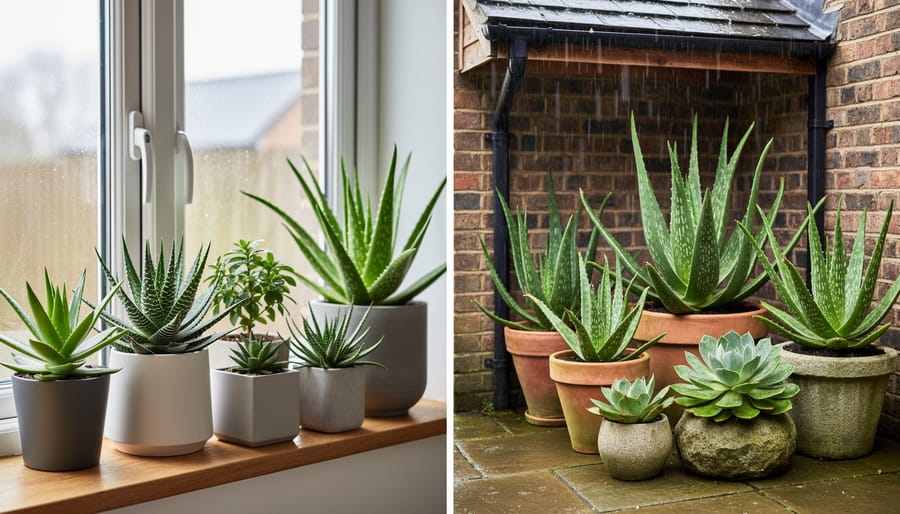
Light is absolutely critical. Aloe vera demands bright, indirect light for at least six hours daily. A south-facing windowsill works beautifully indoors, though I’ve found mine does best set back about a foot from the glass to avoid scorching on those rare blazing summer days. Outdoors, choose a sheltered spot that gets morning sun and afternoon shade. Full British sun won’t harm established plants, but young aloe can develop that telltale reddish-bronze stress colour if exposed too harshly.
Temperature-wise, aloe thrives between 13-27°C. It’ll tolerate brief dips to around 10°C, but anything below that risks permanent damage. This is why most UK gardeners treat aloe as a container plant that moves indoors from October through April. I keep mine on a bright landing where it stays comfortably above 12°C all winter.
Soil composition matters more than most beginners realize. Standard potting compost retains too much moisture and leads to root rot. I learned this from Sarah Bennett, who runs a specialist succulent nursery in Devon. She swears by a mix of two parts multipurpose compost to one part horticultural grit or perlite. The drainage needs to be excellent. When I repot, I always add a layer of gravel at the container bottom.
Here’s what aloe needs to thrive in UK conditions:
- Bright indirect light for 6+ hours daily
- Well-draining soil mix with added grit or perlite
- Temperatures consistently above 10°C
- Terracotta or ceramic pot with drainage holes
- Protection from frost and prolonged cold spells
Watering is where most people go wrong. Aloe is drought-tolerant, not drought-loving. During active growth from April to September, I water mine thoroughly when the top two inches of soil feel completely dry, usually every two to three weeks. In winter, I cut back to monthly or even less. The plant’s leaves will feel slightly soft when it genuinely needs water. Overwatering causes that brown mush I mentioned earlier.
Container versus ground planting is straightforward in our climate: containers win. Aloe can survive outdoors year-round in the mildest coastal areas of Cornwall or the Scilly Isles, but elsewhere, the combination of cold and wet soil proves fatal. Containers give you control and mobility. I use terracotta pots because they’re porous and help prevent waterlogging.
The biggest mistake I see? Treating aloe like a typical houseplant with regular feeding and watering schedules. It simply doesn’t need that attention. Feed sparingly, perhaps once in late spring with diluted cactus fertilizer, and resist the urge to fuss. Benign neglect produces the healthiest plants.
Harvesting and Storing Aloe Gel
I’ll never forget the first time I harvested aloe gel, I grabbed a leaf, sliced it open, and slathered the whole mess on a sunburnt shoulder. The result? A burning sensation worse than the sunburn itself. Turns out, I’d learned the hard way about aloe’s bitter yellow latex layer, the stuff that sits just beneath the leaf’s outer skin. A gardening friend later showed me the proper technique, and it’s transformed how I use this plant.
Start by selecting a mature outer leaf, at least eight inches long and plump with gel. Use a clean, sharp knife to cut as close to the base as possible, this encourages the plant to focus energy on remaining leaves. Once you’ve removed the leaf, stand it upright in a jar for ten to fifteen minutes. You’ll notice yellowish liquid draining from the cut end. This is the latex, which contains compounds that irritate skin and digestive systems. Let it drain completely.
After draining, lay the leaf flat and slice off the spiny edges. Then carefully peel away the thick green skin from one side, revealing the clear, slippery gel beneath. You can scoop this out with a spoon or fillet the leaf like you would a fish, sliding your knife between gel and skin. Rinse the extracted gel under cool water to remove any remaining latex traces, it looks milky at first, then runs clear.
For immediate use, fresh gel works brilliantly. For storage, transfer it to a clean glass jar and refrigerate for up to a week. The gel will start to oxidize and turn pinkish after a few days, which doesn’t affect its properties but looks less appealing. For longer storage, I blend the gel smooth and freeze it in ice cube trays. Pop out a cube whenever you need it for smoothies, face masks, or minor burns. These frozen cubes keep for six months and make aloe ridiculously convenient to use year-round.
Common Questions About Aloe Vera
Over the years, I’ve fielded countless questions about aloe vera from fellow gardeners, both at local allotments and through Great Gardens UK readers. Some queries crop up repeatedly, so I’ve gathered the most common ones here with straightforward answers based on what I’ve learned through trial, error, and conversations with more experienced growers.
Is aloe safe for all skin types?
Most people tolerate aloe gel well, but it’s wise to patch-test on a small area first if you have sensitive skin or known plant allergies. I always recommend this to newcomers, as occasional reactions can occur.
Can you eat aloe straight from the plant?
You can consume the clear inner gel in small amounts, but never eat the yellow latex layer just beneath the skin as it can cause digestive upset. Rinse the gel thoroughly and start with tiny quantities if you’re new to internal use.
How long does fresh aloe gel last?
Fresh gel keeps in the fridge for about a week in an airtight container. For longer storage, I freeze it in ice cube trays, which gives you convenient portions that last several months.
Will aloe survive a UK winter outdoors?
Aloe vera isn’t frost-hardy and will suffer damage below 5°C, so bring outdoor plants inside before the first frost. I’ve lost plants to unexpected cold snaps, so now I always overwinter mine on a sunny windowsill.
Can I grow aloe from a cutting?
Aloe doesn’t root easily from leaf cuttings, but the offsets (pups) that appear at the plant’s base transplant beautifully. Wait until pups have a few roots of their own, then gently separate them from the parent plant.
Does aloe need much water?
Less than you’d think. Aloe prefers dry soil between waterings, and overwatering is the quickest way to cause root rot. I water mine every two to three weeks in summer and monthly in winter.
One question I hear often at garden centres is whether aloe can handle low light conditions. While aloe tolerates some shade, it thrives in bright, indirect light and grows leggy and pale without enough sun. I’ve seen this firsthand when I kept a plant in a north-facing bathroom for too long.
Another frequent concern involves the plant’s growth rate. Aloe grows steadily but not rapidly, especially in cooler UK conditions. Don’t expect dramatic size increases week to week. Mine typically produce one or two new leaves per month during the growing season, which feels slow until you realize how substantial and useful each mature leaf becomes.
People also ask whether aloe attracts pests. In my experience, aloe rarely suffers from insect problems, though mealybugs occasionally appear on stressed plants. Good air circulation and avoiding overwatering keep most issues at bay. The thick, bitter-tasting leaves seem to deter most garden pests naturally, which makes aloe one of the lower-maintenance plants in my collection.
Standing in my garden shed the other day, I counted seven different uses I’d found for aloe in just the past month. From soothing my neighbour’s sunburned shoulders after an overenthusiastic afternoon of weeding to cleaning sticky residue off my pruning shears, this single plant has become as indispensable as my favourite trowel.
That’s what I love most about growing functional plants like aloe. They blur the line between ornament and utility, transforming your garden from a pretty backdrop into an active partner in daily life. Aloe sits alongside my rosemary hedge, lavender borders, and mint beds as part of what I call my practical garden toolkit. These aren’t just plants to admire through the window, they’re living resources that reduce my reliance on shops and chemicals whilst deepening my connection to what I grow.
If you’ve never kept an aloe, I’d urge you to start with one small plant. Pop it on a sunny windowsill and simply observe it for a few weeks. Get comfortable harvesting a leaf when you need it. Try the gel on dry hands after gardening or blend a spoonful into your morning smoothie. You’ll quickly discover which uses suit your household best, and you might find yourself surprised by how often you reach for it.
I’d genuinely love to hear what works for you. Have you tried aloe as a rooting hormone? Does it help with your eczema patches or your cat’s scratched ear? Drop your experiences in the comments below or catch me on the forum. Sharing these small discoveries is how we all become better, more resourceful gardeners together.