Plant basil, marigolds, nasturtiums and carrots alongside your jalapeños, keep them well away from fennel and brassicas, and give each pepper roughly 45 to 60cm of space. That’s the whole system. Set it up in an afternoon, with no special skills needed, and it starts paying you back from the first warm weeks of the season.
Why does it work? Jalapeños are sun-hungry, shallow-rooted and a magnet for aphids and whitefly, especially in a British greenhouse or polytunnel. Aromatic herbs like basil muddle the scent trail that pests follow. Marigolds and nasturtiums act as decoys, drawing aphids onto themselves and leaving your peppers alone. Low-growing companions shade the soil, which keeps those fussy roots cooler and the compost from drying out between waterings.
I learned the flip side the hard way. One year I tucked a few jalapeños in beside my fennel because there was a gap, and by midsummer they were sulking, stunted and sparse. Fennel is a notorious loner that holds back almost everything near it, and peppers are no exception.
Below, I’ll walk you through what to gather, the pairings to avoid, and a simple step-by-step plan for pots, raised beds and greenhouse borders, so you can grow healthier plants and a bigger, hotter harvest.
Why Jalapeños Love Good Company
Jalapeños are sun-lovers at heart, and in the UK that makes them a little fussy. They want warmth, bright light and shelter from wind, which is why most of us do best with them in a greenhouse, a polytunnel or a sunny, sheltered spot on the patio. Left alone in a pot, though, a single plant can feel rather exposed, and that’s where good company comes in.
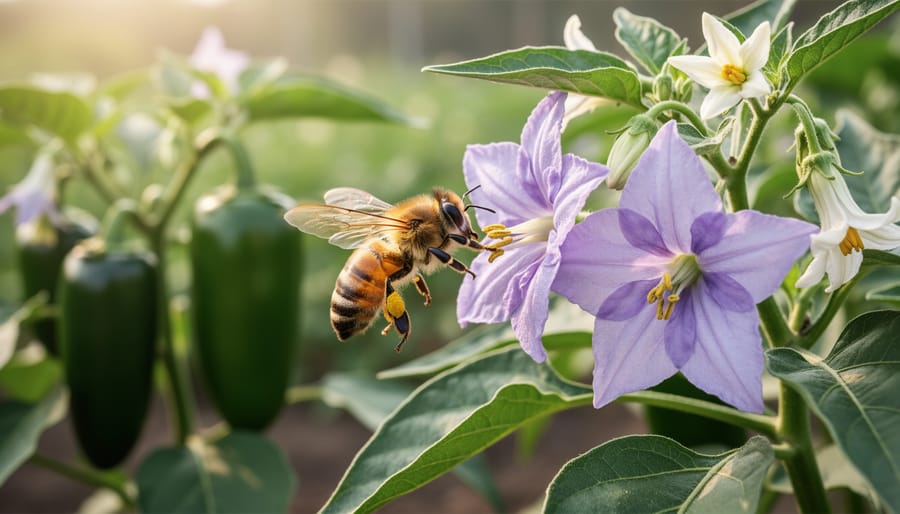
Companion planting simply means letting neighbouring plants do useful jobs for each other. Strongly scented herbs like basil and chives can confuse aphids and whitefly, the two pests that bother my chillies most. Flowers such as marigolds and calendula draw in bees and hoverflies, and more pollinator visits means better fruit set once the jalapeño blossoms open. Low, leafy plants shade the soil around the roots, which keeps moisture in and stops the compost baking on hot days. They also crowd out weeds that would otherwise steal water and nutrients. If you’d like a broader grounding in the basics, these companion planting methods are a good place to start.
A mixed planting suits chillies because they’re compact, sun-hungry and don’t mind sharing a bed, provided their neighbours stay low and don’t shade the leaves. Mind you, plenty of gardeners prefer to grow peppers on their own, and that works perfectly well too. A solo plant with regular checks can crop beautifully. Think of companions as a helpful extra, not a requirement.
What You’ll Need Before You Start: Plants, Tools and Materials
Before I put a single plant in the ground, I like to gather everything in one go. There’s nothing more annoying than kneeling in a half-planted bed and realising the ties are still in the shed. Here’s what I’d have to hand:
- Two or three healthy jalapeño plants, either young plug plants or strong seedlings from your own windowsill.
- Companion plants or seeds, such as basil, French marigolds, nasturtiums, chives and a few carrots.
- A container at least 30cm (12 inches) wide and deep per jalapeño, or a sunny raised bed with room to spread.
- Peat-free multipurpose compost, ideally mixed with a little grit or perlite for drainage.
- A high-potash tomato feed to support flowers and fruit.
- Bamboo canes and soft garden ties for supporting the plants.
- Mulch, such as composted bark or well-rotted leaf mould.
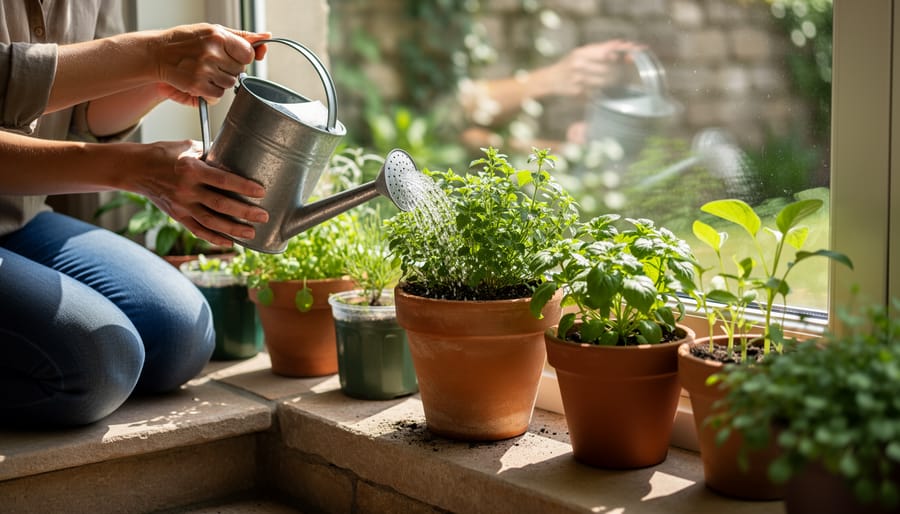
- A watering can with a fine rose, so you can water gently at the roots.
A quick word on containers. Jalapeños sulk in cramped pots, and companions need elbow room too, so go a size larger than you think you need. Whatever you choose, make sure it has proper drainage holes.
My potting shed has a dedicated shelf for this job. On it sit a half-used bag of peat-free compost, a battered tin of canes, a ball of green twine that never seems to run out, and a bottle of tomato feed with a very faded label. Next to it, I keep an old seed tray of spare marigolds, because there’s always a gap that needs filling. None of it is fancy, but having it all in one spot makes planting day feel like a treat rather than a scramble.
The Best Companion Plants for Jalapeños (and Why They Work)
Herbs and Flowers That Protect Your Plants
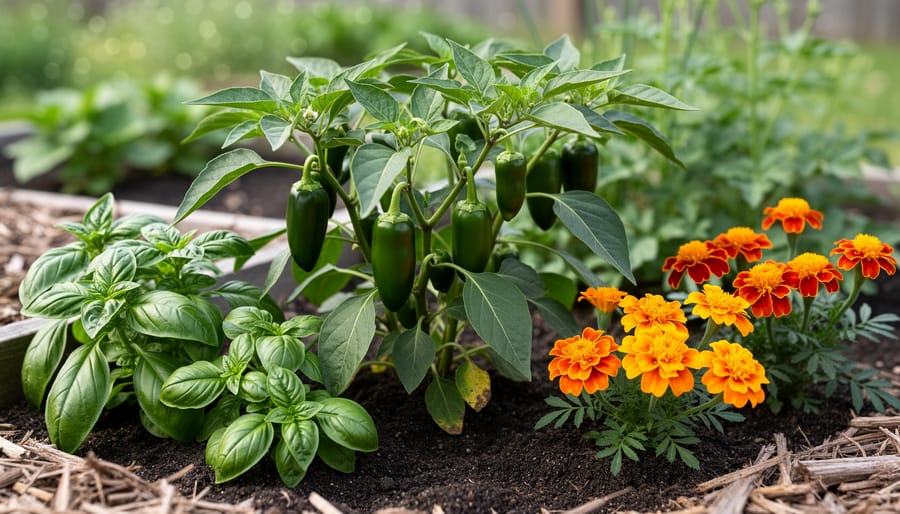
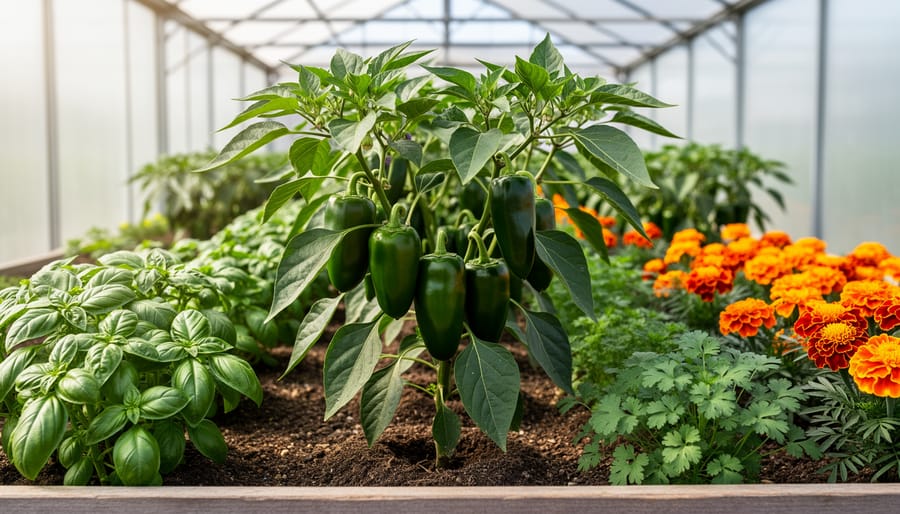
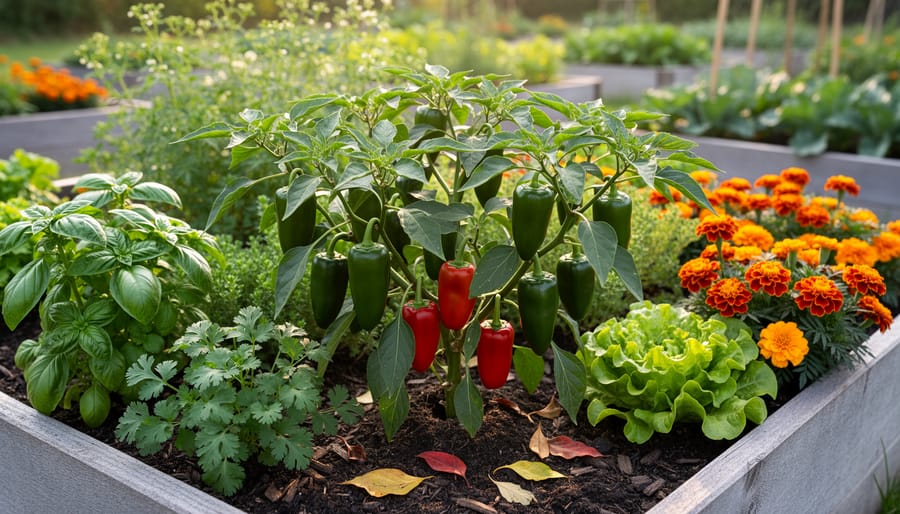
Basil is my first choice, and not only because it makes a cracking pesto. Its strong scent seems to confuse aphids and whitefly, and it enjoys the same warm, sunny spot as jalapeños. I tuck a plant or two about 20cm from each chilli, which leaves room for airflow and for picking.
French marigolds are my greenhouse staple. Their pungent foliage helps deter whitefly, and the open flowers draw in hoverflies, whose larvae feast on aphids. Dot them along the front of the bed or pot them up between your chillies.
Chives and garlic both give off a sharp onion scent that aphids dislike. I grow chives in a small pot at the corner of the planting, and push a few garlic cloves in around the edges, well clear of the jalapeño roots so they don’t compete.
Nasturtiums work differently, acting as a sacrificial trap. Blackfly adore them, so they tend to settle there rather than on your peppers. Plant them a little way off, perhaps at the end of the row, and let them sprawl.
Whichever you choose, keep a gap around each jalapeño so air can move through the leaves.
Vegetables That Share the Bed Happily
Not every companion has to be a flower or a herb. Some of my happiest pairings are plain old vegetables that simply stay out of the jalapeños’ way.
Carrots are my first pick. Their roots dive deep while pepper roots stay shallower, so they barely notice each other. Lettuce and spinach make lovely living mulch around the base of the plants, shading the soil and keeping it cool. I tuck them in early, and by the time the jalapeños need the room, I’ve already eaten most of the leaves.
Onions are the quiet heroes. Their strong scent confuses a lot of pests, and if you grow onions in a ring around your chilli plants, they take up very little space.
One summer I squeezed a row of carrots along the front of my greenhouse bed, mostly because I’d run out of room elsewhere. The jalapeños fruited just as well, and I got a bonus harvest of sweet little carrots to nibble while watering.
Plants to Keep Away From Your Jalapeños
Not every plant makes a good neighbour, and I learned that the hard way one summer when a lone fennel plant took over the corner of my greenhouse bench. My jalapeños sulked beside it for weeks. Fennel gives off compounds that can hold back the growth of many nearby crops, so it tends to do better in a pot of its own, well away from the peppers.
Here are the usual suspects I now keep at arm’s length:
- Fennel, because it can stunt the growth of many neighbouring crops.
- Brassicas such as cabbage, broccoli and kale, which compete hard for nutrients and space.
- Large, hungry feeders like sweetcorn or sprawling courgettes, which can crowd the roots and shade the peppers.
- Anything planted so tightly that it blocks airflow, since damp, still air invites mildew and rot.
Brassicas are the one that surprises people. They are lovely plants, but they want lots of nitrogen and a cooler root run, whereas jalapeños prefer warmth and a lighter touch with feeding. Putting them cheek by jowl means one of them usually loses out.
That said, I wouldn’t call any of this gospel. Soil, aspect and microclimate vary enormously across the UK, and plenty of gardeners happily grow combinations I’d avoid. If you’re tempted, try it on a small scale, keep an eye on how your jalapeños respond, and jot down what you notice. Your own garden is the best test bed.
Safety Notes: Handling Chillies and Choosing Garden-Safe Companions
I learned about gloves the hard way, one evening after picking a heavy crop and then rubbing my eye without thinking. Never again. Jalapeños are milder than many chillies, but the capsaicin still lingers on skin and stings for hours.
Once the picking is done, wash your hands and any snips or knives with warm soapy water. I keep a dedicated pair of secateurs for chillies so nothing fiery ends up on the salad leaves.
Do check your companions are animal-safe too. Marigolds, nasturtiums and basil are generally fine in a garden with pets, but garlic and chives can upset cats and dogs if they nibble enough, so plant them out of reach if yours are curious.
Know when to stop and step in. If a companion is crowding the jalapeños and blocking airflow, trim it back or lift it out. The same goes for anything showing signs of disease, such as mildew or blotchy leaves, because it can spread quickly in a warm greenhouse.
Finally, skip strong sprays on anything in flower. Bees visit those blooms daily, and your jalapeños need them for good fruit set.
How to Plant Jalapeños With Their Companions, Step by Step
The first year I tried this properly, I rushed everything and my jalapeños paid for it. Now I follow the same order every spring, and it has never let me down. Good UK planting timing matters most: sow jalapeño seed indoors in early spring, keep it warm on a bright windowsill, and only move plants outside once frost risk has genuinely passed. Chillies sulk if they’re chilled.
Here’s the sequence I work through:
- Pick your spot. Choose the sunniest, most sheltered position you have, or a greenhouse bench, because jalapeños need warmth and light to set fruit.
- Prepare the compost or bed. Fork in plenty of peat-free compost so the soil is rich but free-draining, as soggy roots lead to unhappy plants.
- Harden off your seedlings. Spend a week or two putting plants outside by day and bringing them in at night, so the shock of real weather doesn’t stall them.
- Plant the jalapeños. Set them in once the nights are mild, spacing them about 45cm apart so air can move between the leaves.
- Add the companions. Tuck basil and French marigolds close by, put nasturtiums at the bed’s edge as a blackfly decoy, and sow carrots or lettuce in the gaps.
- Water in and mulch. A good soak settles the roots, and a layer of mulch holds moisture and keeps weeds down.
- Support as they grow. Push in a cane early and tie the stem loosely, before a heavy crop of fruit weighs the plant down.
- Feed once flowers appear. Switch to a high-potash tomato feed every week or two to encourage fruit rather than leaf.
Once everything is in, the job becomes one of gentle attention. I walk the bed most mornings with a cup of tea, checking for aphids, nipping off any companion that’s crowding the airflow, and watering at the base rather than over the leaves. Water more often in a greenhouse, where compost dries out surprisingly fast, and less often outdoors after rain. It’s a small routine, but it’s the difference between a bed that merely survives and one that hums with bees by midsummer.
How to Tell It’s Working and What to Do Next
You’ll know the planting is working when the plants start telling you so. Aphid numbers stay low, with only the odd cluster on a growing tip that a squirt of water sorts out. Bees and hoverflies visit your flowers on warm mornings. The jalapeños themselves flower steadily, set fruit without much dropping, and keep a glossy, deep green leaf. Pale, yellowing leaves or a sudden run of dropped flowers is your cue to look closer.
If something’s off, change one thing at a time. Crowded plants need more space or a trim, because airflow matters, especially under glass. Swap out a companion that’s sulking or smothering its neighbour, or move containers to a sunnier, more sheltered spot. If you want another pest-friendly helper, I’ve had good results trying yarrow as a companion at the edge of a bed.
Keep a simple garden notebook. Jot down what you planted where, when the first flowers appeared, and what pests turned up. It’s the best tool I own. And pick your jalapeños regularly, because picking encourages the plant to keep fruiting.
My allotment neighbour Margaret, who has grown chillies for over twenty years, put it neatly: “I stopped chasing perfection. I note what thrived, swap one plant a year, and let the marigolds and bees do the rest.”
Next season, try a new pairing and compare your notes.
Common Questions About Companion Planting Jalapeños
Here are the questions I get asked most often, answered as plainly as I can.
Can I grow jalapeños with tomatoes?
Yes, they’re close cousins and enjoy the same warmth, sun and high-potash feed, so they share a greenhouse bench happily. Give each plant good airflow and watch for blight, which can travel between the two.
Do jalapeños grow well in pots with companions?
They do, as long as the pot is big enough, around 30cm across or more. Pair one jalapeño with low-growing basil or a few nasturtiums rather than anything greedy.
Can I plant different chilli varieties together?
You can, and they’ll thrive side by side. Just remember that cross-pollination affects the seeds you save, not the fruit you eat this year.
What if I only have a small patio or windowsill?
Pick one jalapeño and one or two compact partners, such as basil or chives, in a deep pot. A bright, south-facing sill works well in a British summer.
Do marigolds really work?
French marigolds lure hoverflies, which eat aphids, so they help, though they’re no magic shield. I plant them because they earn their keep and brighten up the greenhouse.
If you’re curious about getting more from the rest of your plot too, these garden transformation tips are a good place to carry on exploring.
A few well-chosen neighbours can change how your jalapeños grow. Basil and marigolds keep the aphids guessing, nasturtiums take the blame for the blackfly, and borage and calendula tempt the bees in to do their work. Meanwhile carrots and chives quietly share the space without a fuss. Keep the fennel and brassicas elsewhere, and your peppers have a much easier summer.
What I love most isn’t the harvest, though the harvest is lovely. It’s standing in the greenhouse on a warm July morning, mug in hand, listening to the hum of bees moving between the flowers while the jalapeños swell on the stems. A mixed bed feels alive in a way a lonely row of peppers never does.
Do give it a go, even with just one pot and a pair of marigolds. And tell us what you try. Share your own pairings and results with the Great Gardens UK community, because the best tips always come from other gardeners’ beds.