I’ve tested fifteen different gardening forks over the past three seasons in my heavy Hertfordshire clay, and the right choice comes down to three core factors: tine design, handle length, and whether you’ll use it primarily for digging, lifting, or turning compost. A quality border fork with four flat tines runs £35-85 in 2026 and handles most small garden tasks brilliantly, while a full-sized digging fork with square-section tines (£45-120) is essential if you’re breaking new ground or wrestling compacted soil.
The confusion most gardeners face isn’t whether they need a fork (you absolutely do), but which type deserves a place in the shed. I learned this the hard way in 2024 when I bought a cheap all-purpose fork that bent on its second outing, leaving me mid-border with a useless piece of twisted metal and half a bed of unplanted tulips.
This guide walks you through the genuine differences between fork types, the buying factors that actually matter (and the marketing claims that don’t), and the mistakes that cost UK gardeners money every spring.
Why Every UK Gardener Needs the Right Fork
I’ll never forget the spring morning I tried lifting an overgrown clump of crocosmia with a cheap, flimsy fork I’d inherited from a neighbour’s shed clearance. The handle flexed alarmingly with each attempt, and after twenty minutes of wrestling, I’d barely loosened the soil around the plant. My back ached, my patience had evaporated, and the crocosmia remained stubbornly rooted. The following week, I borrowed a friend’s solid digging fork, and the same task took perhaps five minutes. The difference wasn’t just in time saved; it was the pleasure of working with a tool that did what I asked of it, that felt balanced in my hands, that penetrated our sticky clay soil without protest.
That experience taught me what every seasoned UK gardener knows: a good fork isn’t just a purchase, it’s an investment in your gardening life. The right fork transforms countless tasks from frustrating struggles into satisfying work. Need to aerate compacted lawn edges where grass has stopped thriving? A fork works those areas without the back-breaking effort of a spade. Turning your compost heap to speed decomposition? The tines slip through material and lift it effortlessly. Breaking up the heavy, clay-based soil so common across much of England, Wales, and Scotland? A quality fork penetrates where spades simply skid across the surface.
The versatility matters especially in smaller UK gardens where every tool needs to earn its storage space. My border fork, for instance, digs new planting holes, lifts congested perennials for division, works compost into beds, and edges the vegetable patch. It’s become the tool I reach for most often, proving that choosing wisely based on your actual gardening needs pays dividends in efficiency and sheer enjoyment every time you step outside.
Types of Gardening Forks Compared
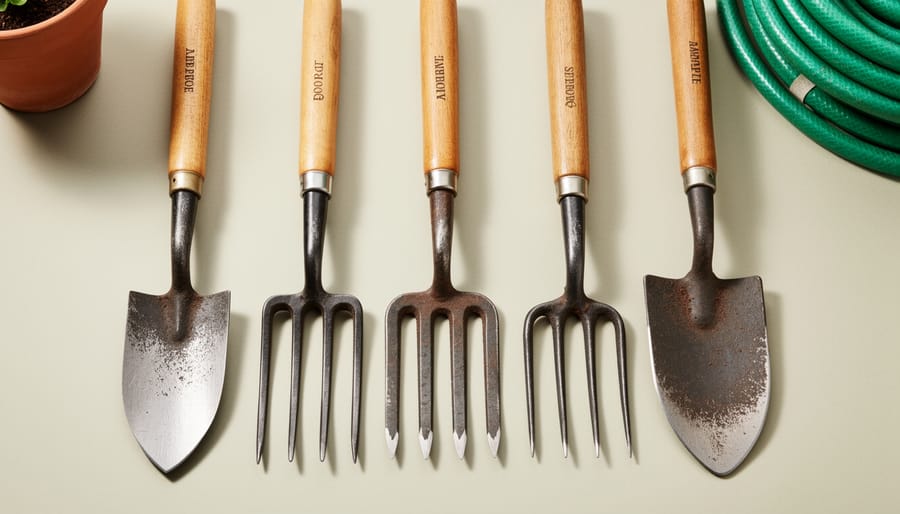
Digging Forks (Full-Size Garden Forks)
A full-size digging fork is the workhorse of the garden, the tool I reach for when there’s serious ground to break. It typically measures around 115 to 120 centimeters in total length, with a head width of about 20 centimeters carrying four sturdy, square-section tines spaced roughly 5 centimeters apart. The weight usually sits between 1.8 and 2.5 kilograms, substantial enough to let gravity do some of the work when you’re driving it into stubborn soil.
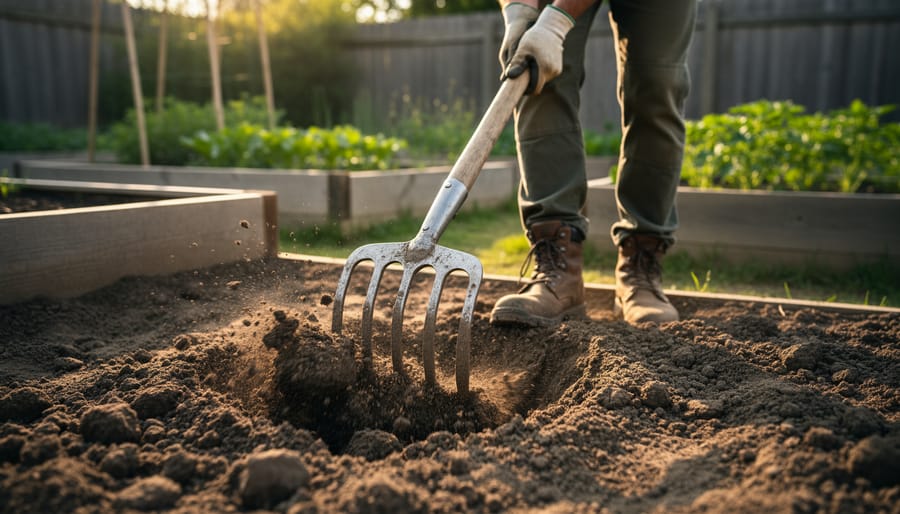
I turn to my digging fork for the heavy lifting: breaking up virgin ground for new beds, turning over compacted soil at the start of the season, and working compost deep into open plots. Those square tines punch through clay and thick turf with far more ease than a spade, and the spacing lets soil fall away as you lift, saving your back from hauling unnecessary weight. In my main vegetable patch, where I’ve got room to swing and the soil needs regular loosening, this fork is my first choice every time. It’s built for power and leverage in open spaces where precision matters less than getting the job done.
Border Forks
I switched to a border fork about four years ago for working in my perennial beds, and I won’t go back. The difference hit me the first time I needed to lift a congested clump of Japanese anemones wedged between a stone path and an established hydrangea. A full-size digging fork simply wouldn’t fit without damaging neighbouring plants or scraping the stone edging.
Border forks measure roughly 20cm narrower than standard digging forks, with shorter, more closely spaced tines. Mine weighs around 1.3kg compared to the 2kg heft of my old digging fork. That might not sound like much, but after an hour of weeding in tight spaces between shrubs, your wrists notice.
The narrower head slips between crowded stems without snapping brittle perennial shoots. I use mine constantly for dividing hostas, lifting astilbes for replanting, and teasing out bindweed roots from beneath hardy geraniums without disturbing the whole clump. The reduced weight also means less fatigue when working at awkward angles in confined borders.
Don’t mistake lighter for flimsy. A well-made border fork with forged carbon steel or stainless steel tines handles heavy clay and compacted soil just as capably as its larger cousin. The trade-off is reach rather than strength. For open vegetable beds or breaking new ground, I still grab the digging fork. But for established borders, cottage garden plantings, and anything involving precision work around precious plants, the border fork has become my most-reached-for tool.
Compost and Mulch Forks
Compost and mulch forks look quite different from their digging cousins, and for good reason. They typically feature more tines, often five or six rather than four, spaced closer together to catch smaller material. The construction is lighter too, which makes sense when you’re lifting loose organic matter rather than battling compacted clay.
I reach for mine constantly during compost turning sessions. The extra tines mean you scoop up more material with each forkful, and the lighter weight lets you keep a comfortable rhythm when you’re working through a whole heap. They’re brilliant for spreading mulch around established borders without damaging surface roots, and the tines slide through shredded bark or leaf mould beautifully.
Here’s the honest bit, though: if you’re only composting occasionally and have limited storage space, a border fork will manage the job. I justified buying a dedicated compost fork once I had two active heaps and found myself turning them monthly. If composting is central to how you garden and you’ve got room in the shed, the specialization pays off in comfort and speed. For occasional use, it’s a nice-to-have rather than essential.
Hand Forks
Hand forks are the pocket-sized cousins of the full garden fork, and I find them invaluable for detailed work that would be clumsy with a long-handled tool. These compact versions typically have three or four short tines and a small handle that fits comfortably in one hand, making them perfect for container gardening where you need to loosen soil around established plants without damaging roots. I keep mine handy when I need to weed between delicate alpines, lift small bulbs, or work the soil surface when I group pots together on my patio. They’re not a replacement for a proper border or digging fork, but rather a precision tool for when a full-size fork would be overkill.
Key Buying Factors: What to Look for in a Quality Fork
Head Material: Carbon Steel vs Stainless Steel
I’ve tested dozens of forks over the years, and the choice between carbon steel and stainless steel always comes down to a balance between your budget, maintenance habits, and how you use the tool.
Carbon steel forks are the workhorses of the gardening world. They’re exceptionally strong, hold a sharp edge on the tines, and won’t break the bank. I’ve used the same carbon steel digging fork for nearly fifteen years, and it’s still going strong. The trade-off? These forks will rust if you store them wet or leave them outdoors through British winters. I learned this the hard way when I forgot my border fork leaning against the shed after a rainy afternoon’s weeding session. Within days, I spotted the telltale orange bloom. The good news is that a quick brush with wire wool restored it completely, and now I’m religious about wiping down my carbon steel tools after use.
Stainless steel forks are rust-resistant and need little maintenance, which makes them brilliant if you’re someone who occasionally forgets to clean tools before putting them away. They’ll happily survive being stored in a damp shed without complaint. The downside is they typically cost more upfront, and some gardeners find them slightly heavier.
My personal preference? I keep both. For everyday digging and turning compost where I know I’ll clean the fork straight away, I reach for carbon steel. For border work where I might leave the fork propped in a bed while I answer the door or take a tea break, stainless steel gives me peace of mind. If you’re buying your first fork and tend toward the forgetful side, stainless steel is worth the investment.
Handle Material and Comfort
I spent an entire Saturday last spring double-digging a new vegetable bed, and by mid-afternoon my hands were blistered and my lower back was screaming. The culprit? A fork with a handle too short for my height and a grip that became slippery with sweat. That painful lesson taught me that handle choice matters as much as head quality when you’re planning serious garden work.
Wooden handles, traditionally ash or beech, offer a warm feel and natural flex that absorbs some shock as you work. They’re comfortable to grip in cold weather and develop a lovely patina over years of use. The trade-off is that wood requires occasional treatment with linseed oil to prevent splitting, and cheaper examples can splinter or crack if neglected.
Metal handles, typically steel with a plastic or rubber coating, are virtually indestructible and need no maintenance beyond a wipe-down. I find them best for lighter tasks, though, because they transmit more vibration through your arms during heavy digging, which becomes tiring quickly.
Composite handles, made from fibreglass or similar materials, strike a middle ground: lightweight, weatherproof, and strong. Many professional gardeners I know have switched to composites for their combination of durability and reduced fatigue.
Handle length is crucial and often overlooked. If you’re taller than average, a standard handle will force you into a bent posture that strains your back. Measure from the ground to your hip, then add fifteen centimetres as a starting point for comfortable working height.
Tine Design and Strength
Tine shape matters more than most gardeners realize. Square tines are typically stronger and better for breaking through compacted soil or heavy clay, common challenges in UK gardens. They’re my first choice when I’m preparing beds for understanding green manure crops or digging out stubborn perennials. Flat tines, on the other hand, slice through lighter soil more easily and are excellent for aerating and lifting without excessive disturbance, which is handy when you’re creating a perfect soil circle around established plants.
Tine spacing also affects performance. Wider spacing allows soil to pass through more freely, reducing the weight you’re lifting with each forkful. Closer spacing provides more contact points, which helps when you’re lifting root balls or turning compost.
Construction method is where durability lives or dies. Forged forks, where the head and socket are shaped from a single piece of metal, are significantly stronger than welded designs. I learned this the hard way when a welded fork snapped at the joint during a routine digging session. Forged construction costs more upfront, but it’s the difference between a fork that lasts decades and one that fails when you need it most.
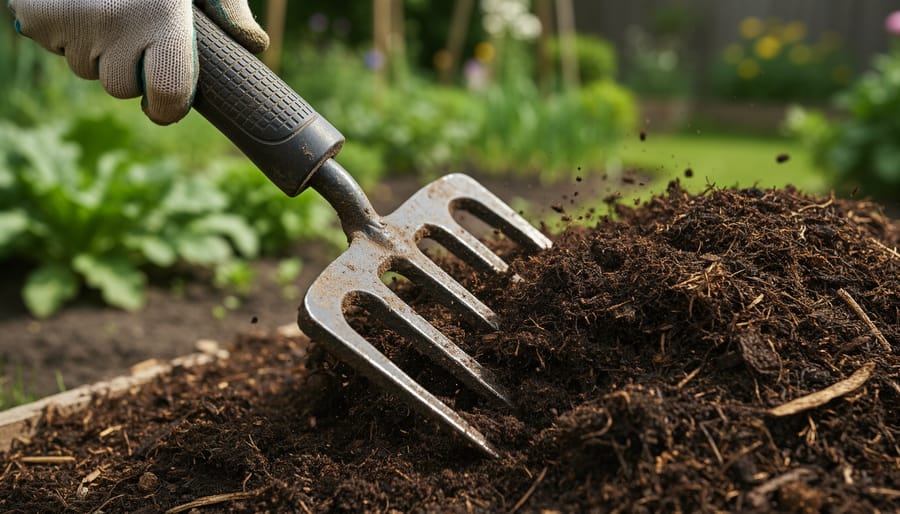
Weight and Balance
Weight and balance matter more than most gardeners realize until they’ve spent an afternoon wrestling with an unwieldy fork. I learned this the hard way with a heavy digging fork that left my shoulders aching after just an hour of work. A well-balanced fork should feel like an extension of your arm, with the weight distributed so you’re not fighting the tool with every lift.
Border forks shine here because they’re lighter than full-size forks while maintaining surprising strength, making them ideal for extended sessions or working overhead when lifting plants. If you have any mobility concerns, arthritis, or simply prefer a less demanding tool, the reduced weight makes a genuine difference without sacrificing effectiveness. Pick up the fork before buying and test how it feels when you lift it at waist height, then imagine repeating that motion fifty times. The head shouldn’t feel like it’s dragging the handle forward, and the shaft length should let you work without constant stooping.
My Recommendations for UK Gardens in 2026
Over fifteen years of digging in Yorkshire clay and sandy Kentish soil, I’ve learned that the “best” fork depends entirely on your garden’s character and your most common tasks. Here’s how I’d guide you through choosing.
If you’re working a typical UK suburban garden with mixed borders and vegetable beds, a border fork is your workhorse. It handles 90% of what you need, lifting perennials in autumn, aerating compacted patches, working compost into beds, while being light enough that an hour of steady work won’t leave your shoulders aching. I reach for mine far more often than my full-size digging fork, which now comes out mainly for initial ground breaking or turning heavy clay in winter when moisture makes it workable.
For gardeners tackling allotments, breaking new ground, or managing large open beds, the full-size digging fork justifies its weight. The extra heft drives tines deeper with less effort in compacted soil, and the broader head moves more material per thrust when you’re double-digging or incorporating green manure.
For material choice, I’ve settled on stainless steel for my border fork because it lives outside in a lean-to and British weather would punish carbon steel. My digging fork is carbon steel, stored dry in the shed, because the extra strength matters for heavy work and I don’t mind the quick wire-wool scrub a few times a season. If your budget allows only one quality fork, choose the type that matches your most frequent task and prioritize forged construction and comfortable handle length for your height over flashy features.
Specific models and their prices shift constantly, but these characteristics remain the foundation of a fork that will serve you reliably for decades.
Common Mistakes to Avoid When Buying a Gardening Fork
I learned this lesson the hard way about five years ago. I’d just moved to a new house with a proper garden, and I was buzzing with enthusiasm to get stuck in. I walked into a garden centre, saw what looked like a perfectly decent fork on a clearance rack for £9.99, and grabbed it without a second thought. What a bargain, right? Wrong. Within three weekends of turning over my new beds, the handle had started to split where it met the socket, and the fork head twisted slightly whenever I hit resistance. I ended up spending twice as much on a replacement, plus the frustration of those wasted weeks. That fork now lives in my shed as a reminder: cheap isn’t the same as good value.
Here are the mistakes I see gardeners making again and again, including the ones I made myself:
- Choosing by price alone, the cheapest fork will cost you more in replacements and frustration within a couple of seasons
- Ignoring handle length for your height, a handle that’s too short causes back pain, while one that’s too long makes control difficult
- Buying a full digging fork when you need a border fork (or vice versa), your primary tasks should dictate the type, not just what looks impressive
- Neglecting to consider material maintenance, carbon steel forks need to be stored dry and given a quick brush with wire wool to prevent rust, while stainless steel needs little care but costs more upfront
- Assuming all forks are created equal, forged construction beats welded every time for strength and longevity
The other trap I’ve watched friends fall into is buying a fork that doesn’t suit their soil type. If you’re working heavy clay like we have throughout much of the UK, you need a robust digging fork with good tine spacing. Buy a lightweight compost fork for that job, and you’ll bend the tines on your first serious dig. Think about where and how you’ll actually use the tool, not just what looks good hanging on the shed wall.
Caring for Your Fork: Making It Last
I’ll be honest, I’ve learned most of my maintenance lessons the hard way. After leaving my favourite carbon steel border fork propped against the shed wall through a damp October, I spent a frustrating morning scrubbing off rust that needn’t have been there. Now I’m religious about tool care, and my forks reward me by lasting years longer than they probably should.
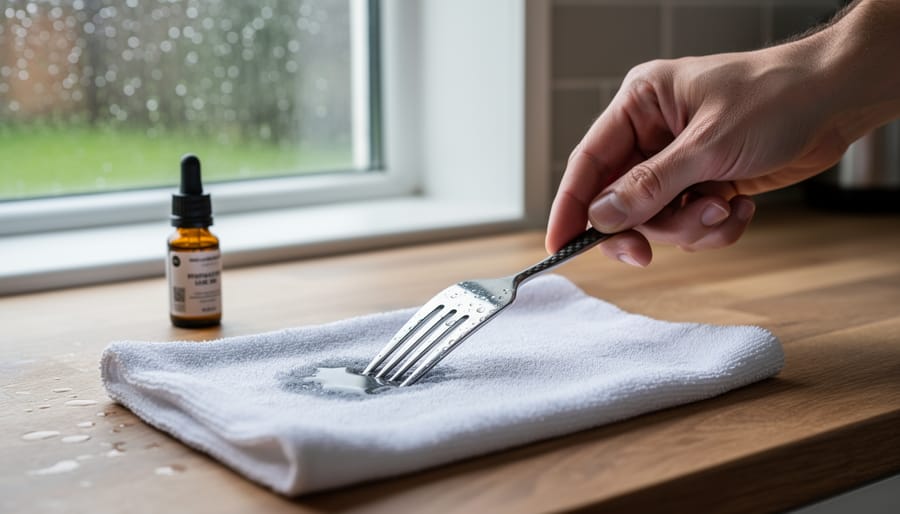
The first habit is the simplest: clean your fork after every use. I keep a stiff hand brush hanging by the garden tap and give the tines a quick scrub to remove soil, especially sticky clay. For carbon steel forks, this matters enormously because trapped moisture accelerates rust. If rust does appear, a quick brush with wire wool restores the metal beautifully, I keep a small roll in my tool shed specifically for this. Stainless steel is more forgiving since it’s rust resistant and needs little maintenance, but I still give it a wipe down to keep the tool working smoothly.
Storage makes the real difference. Carbon steel must be stored somewhere dry, not leaning outside, not in a damp shed corner. I hang mine on wall hooks in the garage where air circulates freely. The same hooks that organize my plastic pot storage work perfectly for keeping forks off the ground and visible.
Wooden handles need attention too. Once a season, usually in late autumn when I’m putting the garden to bed, I rub them down with linseed oil. This prevents splitting and keeps the grip comfortable. Check the shaft-to-head connection annually, if it’s loose, a new rivet costs pennies compared to replacing the entire fork.
Treat your fork well, and it becomes an old friend rather than a replacement expense.
Frequently Asked Questions
How do I choose between a border fork and a digging fork?
Choose a border fork if you work in smaller beds, raised planters, or tight spaces between established plants, it’s lighter and more maneuverable while still strong enough for most digging tasks. Go for a full-size digging fork if you’re breaking new ground, working large vegetable plots, or tackling heavy-duty soil preparation across open areas.
Is stainless steel worth the extra cost?
It depends on your storage situation and maintenance habits. Stainless steel needs little upkeep and stays rust-free even if you occasionally forget to clean it, which makes it ideal if you store tools in a damp shed. Carbon steel performs brilliantly and costs less, but you’ll need to keep it dry and give it a quick brush with wire wool when rust spots appear.
How do I know when to replace my gardening fork?
Replace your fork when the tines bend permanently, crack, or show excessive rust that weakens the metal. A wobbly connection between head and handle is repairable sometimes, but if the fork feels unsafe or the head twists during use, it’s time for a new one.
What’s the best technique for using a fork in heavy clay soil?
Drive the fork in vertically rather than at an angle, rock it back gently to create cracks in the clay, then lift and twist to break up chunks, never pry straight back or you’ll bend the tines. Choose a fork that works in heavy soils with square or thick flat tines, and work when the clay is slightly moist but not waterlogged for easier penetration.
Can I use the same fork for digging and turning compost?
You can, though a dedicated compost fork with more widely-spaced tines makes turning easier because material doesn’t cling between the prongs. If you only want one tool, a standard digging fork handles both jobs adequately, just expect to shake off more compost as you work.
Should I choose a wooden or composite handle?
Wooden handles feel warm in cold weather, absorb vibration nicely, and last decades if you oil them annually, though they can splinter if neglected. Composite handles need zero maintenance and won’t rot, but some gardeners find them slippery when wet or less comfortable during long sessions, try both in the shop if you can.
These questions come up repeatedly when I talk forks with fellow gardeners at allotment open days. The border versus digging fork decision trips people up most often. I’ve watched newcomers wrestle a full-size fork through packed perennial borders when a lighter border fork would’ve saved their backs and their plants. The reverse happens too, someone buys a border fork thinking one tool does everything, then struggles to turn heavy soil in their veg patch.
The stainless steel debate never ends. I run both types and honestly can’t pick a clear winner. My stainless border fork lives outdoors under the shed eave, gets rained on occasionally, and still looks pristine after five years. The carbon steel digging fork needs a quick wipe after muddy days and the occasional rust-removal session, but it cost half as much and digs just as well. If you’re the type who forgets to clean tools before heading indoors, stainless saves hassle. If you enjoy a bit of tool maintenance ritual at season’s end, carbon steel is perfectly fine.
Knowing when to retire a fork isn’t always obvious until something goes wrong mid-task. I kept using a fork with a slightly bent tine longer than I should have, telling myself it still worked. Then it twisted sideways while I was lifting a stubborn dahlia clump and nearly took my thumb with it. Lesson learned.
Standing in my tool shed on a damp March morning, running my hand along the smooth ash handle of the border fork that’s been with me for seven years, I’m reminded that the right gardening fork truly does transform how we experience our gardens. What begins as a simple purchase decision, border or digging fork, carbon or stainless steel, wooden or composite handle, ripples through every season of your gardening life. The fork that fits your height, suits your soil, and feels balanced in your hands turns heavy work into something approaching meditation.
I’ve learned that matching tool to task and gardener isn’t about perfectionism. It’s about respecting both the work and yourself. A border fork for those cramped borders where a full-size tool won’t fit. Carbon steel if you’re happy with a quick wire wool scrub after wet days. Stainless if you prefer minimal maintenance. The investment in quality, in forged tines, comfortable handles, and thoughtful design, pays dividends in reduced fatigue, fewer replacements, and the quiet satisfaction of using something well-made.
Your fork becomes an extension of your hands, a familiar weight that knows your rhythm. I’d love to hear about yours. Which type did you choose? What made the difference? Drop a comment below or email me your gardening fork stories, the triumphs, the mistakes, the tools that became indispensable companions in your own patch of British soil.