I learned the hard way that gardening by seasons isn’t just a nice idea, it’s the difference between a thriving plot and a frustrating cycle of disappointment. Three years ago, I planted broad beans in late May, convinced I could squeeze in a quick crop. They struggled through the heat, attracted every blackfly in the county, and produced a handful of pods that weren’t worth the water I’d used. My neighbour, who’d sown his in February under cloches, was harvesting basketfuls by the time mine were barely flowering.
The UK growing calendar runs from autumn through summer, with each season bringing distinct opportunities and limitations. March to May sees the bulk of seed sowing and transplanting, June to August demands consistent maintenance and harvesting, September to November is your window for soil improvement and spring bulb planting, while December to February allows for planning, pruning, and protecting tender plants. Your actual timing will shift by several weeks depending on whether you garden in Cornwall or the Scottish Highlands, but the seasonal rhythm remains constant.
What caught me off guard wasn’t just the what and when, though. It was understanding why these windows matter. I spoke with Eleanor Hartley, a commercial grower in Herefordshire, who explained that every crop has a temperature threshold and day-length requirement that no amount of enthusiasm can override. “You can’t argue with a plant’s biology,” she told me over tea in her polytunnel. “A courgette won’t flower until the soil’s warm enough, full stop.”
That conversation transformed my approach to vegetable garden planning. I stopped fighting the calendar and started working with it. The results were immediate and honestly a bit humbling.
The Short Answer: What to Do When
If you’re wondering when to get your hands dirty, here’s the essence: spring is your main planting season (March through May), when you’ll sow seeds, plant perennials, and prepare beds as the soil warms. Summer demands maintenancedeadheading, watering, feeding, and succession sowing to keep everything thriving through June, July, and August. Autumn is preparation time (September through November), perfect for planting trees, shrubs, and spring bulbs while the soil still holds warmth, plus dividing perennials and enriching beds for next year. Winter offers breathing space (December through February) for planning, ordering seeds, tackling structural pruning on dormant plants, and maintaining your tools.
That’s the skeleton. The beauty lies in understanding why these windows matter and how to read your own garden’s signals rather than slavishly following calendar dates. A warm spell in February might tempt you outside, but cold soil will rot seeds that would thrive if you waited three weeks. Similarly, autumn planting succeeds because roots establish in warm soil before winter dormancy, giving plants a head start come spring. I learned this the hard way after rushing tender salvias out in early May one year, only to watch a late frost blacken every leaf.
Understanding Your Garden’s Seasonal Calendar
I used to treat the gardening calendar like a rulebook, until the autumn I bought gorgeous allium bulbs in early September, then left them sitting in the shed until late November. By the time I finally planted them, the ground had turned cold and uncooperative, and my display the following spring looked decidedly thin. That mistake taught me something crucial: gardens don’t actually follow the calendar on your wall. They follow soil temperature, daylight hours, and their own internal clocks.
The UK gardening year moves through distinct phases driven by lengthening and shortening days, warming and cooling soil, and the natural cycles of growth and dormancy in plants. Rather than memorizing specific dates, I’ve learned to watch for signals: when forsythia blooms, it’s time to prune roses; when soil crumbles easily in your hand rather than forming a sticky clod, it’s warm enough for seeds; when leaves begin to fall, roots are ready to establish.
Understanding a few key terms helps decode what your garden’s actually telling you:
- Last Frost Date
- The average date after which frost is unlikely in your area, typically mid-May in southern England and late May further north. Marks when tender plants can safely go outside.
- Soil Temperature
- The warmth of soil at root depth, more important than air temperature for germination and root growth. Most seeds need 7-10°C to germinate; you can check with a simple soil thermometer.
- Hardening Off
- Gradually acclimatizing plants raised indoors to outdoor conditions over 7-10 days. Prevents shock from sudden exposure to wind, temperature swings, and direct sun.
- Dormancy
- The winter rest period when plants stop active growth and conserve energy. The ideal time for structural pruning, moving, and planting trees and shrubs.
- Growing Season
- The frost-free period between last spring frost and first autumn frost when tender plants can grow outdoors, roughly May through October in most of the UK.
These concepts matter because they explain the “why” behind timing advice. When someone says “plant in early spring,” they really mean when soil temperature reaches about 7°C and drainage improves. In a sheltered London garden, that might be late February; in exposed Scottish hills, it could be April. Your garden will tell you when it’s ready, if you know what to look for.
Spring: The Season of Planting and Promise
Early Spring Tasks (March)
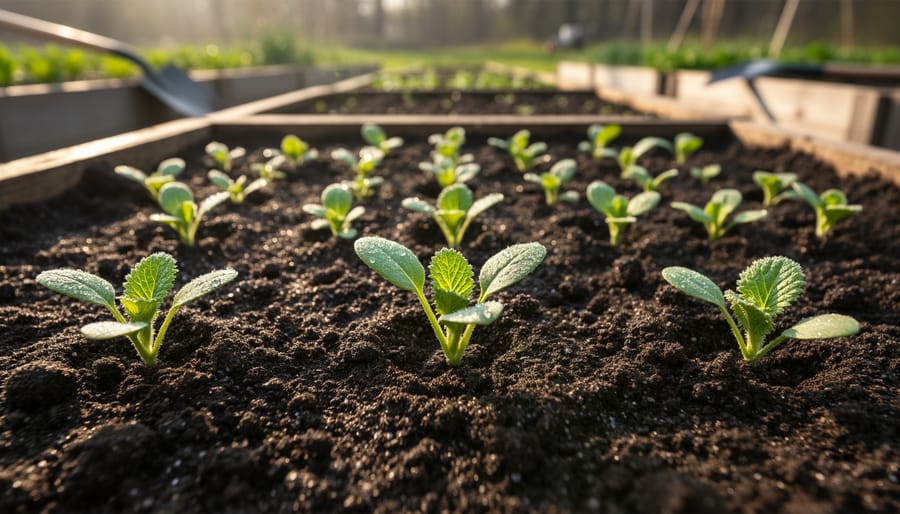
March arrives with that first real warmth on your back as you bend over the soil, and I confess there’s nothing quite like the thrill of those first sowings. I remember one particularly bright March morning, crouching beside my newly cleared vegetable bed with a packet of broad beans, feeling ridiculously excited about pushing seeds into cold earth. That’s the magic of early spring, it feels like pure possibility.
Once the soil has warmed enough that it doesn’t stick to your boots in great clods, you can start sowing hardy vegetables directly outdoors. Broad beans, peas, early carrots, spinach, and rocket all tolerate cool conditions and will germinate happily when soil temperatures reach about 5-7°C. If you’re eager, covering the soil with cloches or fleece for a week beforehand helps warm things up.
This is also your window for pruning roses and summer-flowering shrubs like buddleja, caryopteris, and lavatera. These bloom on new wood produced in spring, so hard pruning now, cutting back to outward-facing buds, encourages strong, flower-laden growth. I tackle my roses on a dry day, making clean cuts with sharp secateurs to prevent disease.
Bed preparation matters enormously now. Fork over soil that’s been resting through winter, incorporate compost or well-rotted manure, and rake to a fine tilth. The effort you put in during March sets up everything that follows. Your back might protest, but your summer vegetables will thank you.
Late Spring Planting (April-May)
By late April, once the threat of hard frosts has largely passed, the garden opens up to a wider palette of possibilities. This is when I finally trust the soil enough to plant tender crops like courgettes, runner beans, and French beans, though I always keep fleece handy just in case. Those deceptive mild spells in early April have caught me out before, tempting me to plant too soon only to watch tender leaves blacken after an unexpected frost.
The key here isn’t the calendar date but the night-time temperatures. I wait until nighttime lows consistently stay above 5°C before planting out anything frost-tender. Summer bedding, petunias, begonias, and my beloved salvias, all need this warmth. Even if garden centres are bursting with colour in early April, resist the urge to rush. A plant set out two weeks later into genuinely warm conditions will quickly overtake one that’s been shivering in cold soil.
Hardening off makes all the difference. For plants raised indoors or bought from protected environments, I give them at least a week of gradual acclimatisation, starting with a few hours outside in a sheltered spot, then building up to full days and finally overnight stays. It’s tedious but transformative. Late spring is also perfect for succession planting tips to keep harvests rolling through summer rather than facing a glut followed by a gap.
Summer: Maintaining Momentum and Succession
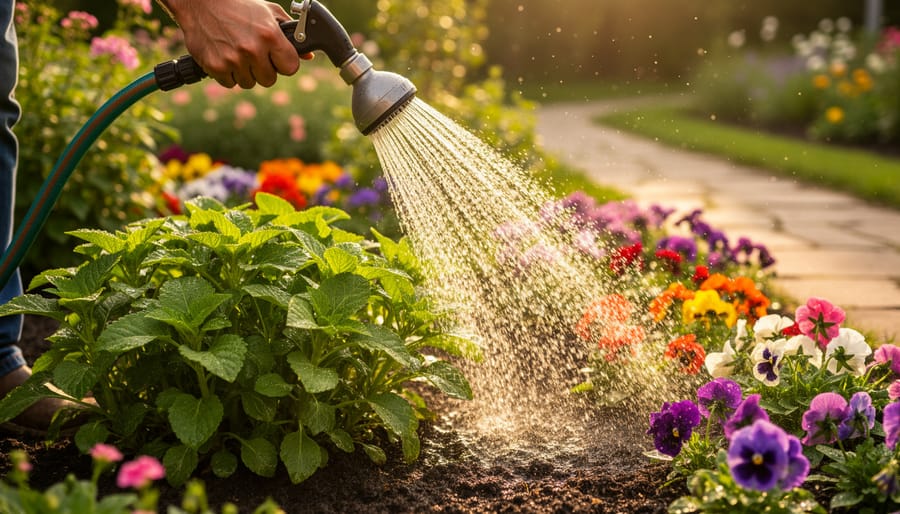
Summer arrives and suddenly everything happens at once. One week you’re admiring tidy borders and neat rows of vegetables; the next, the salvia has shot up another six inches, the roses need deadheading again, and you’ve just realized you forgot to sow another round of lettuce three weeks ago. I learned this lesson the hard way my second year of serious gardening, by mid-July, I had a glut of courgettes I couldn’t give away fast enough, but absolutely nothing coming on behind them. Summer garden maintenance is less about grand projects and more about staying on top of rapid growth, keeping plants performing, and planning ahead even while you’re harvesting.
The key tasks that keep a summer garden thriving run on repeat:
- Deadheading spent blooms every few days encourages continuous flowering in roses, salvias, and most perennials
- Deep watering two or three times weekly beats daily light sprinkling, pushing roots down rather than keeping them shallow
- Liquid feeding every fortnight gives heavy feeders like tomatoes and dahlias the nutrients they burn through quickly
- Regular pest checks catch problems like aphids and caterpillars before they become infestations
- Succession sowing salads, beans, and carrots every three weeks from June through early August ensures harvests into autumn
When I interviewed Sarah from a community garden project in Devon, she emphasized that summer is when gardens either thrive or stall out based entirely on consistency. “It’s not glamorous work,” she told me. “But fifteen minutes every evening with a bucket and secateurs will do more for your garden than a heroic weekend blitz once a month.” She keeps a small notebook by her back door listing what needs attention each week, and she was right, I started doing the same, and suddenly I wasn’t forgetting crucial sowings or letting the beans grow into tough, stringy monsters.
Succession planting takes discipline when you’re already overwhelmed with the current harvest. I now force myself to sow more lettuce, rocket, and French beans even when the salad drawer is full, because I know that three-week gap in production. For root crops like beetroot and carrots, early July is your last realistic window for an autumn harvest. With quick-growing salads, you can push into early August in most UK regions, though they’ll need more water and may bolt faster in heat.
The rhythm matters more than perfection. Miss a deadheading session and the roses forgive you. Skip three weeks of watering in a dry spell and you’ve lost plants. Summer gardening teaches you to work with growth rather than trying to control it, to anticipate rather than react, and to enjoy the abundance even as you’re planning what comes next.
Autumn: Preparing for the Year Ahead
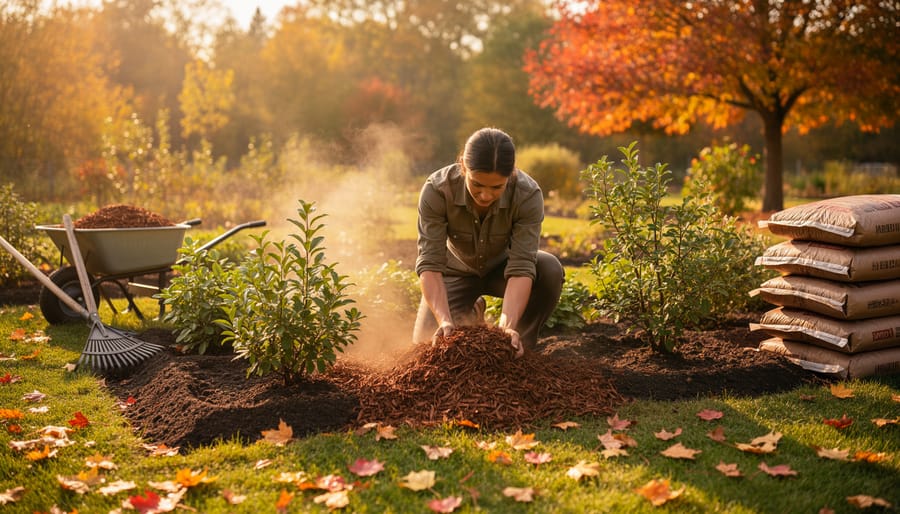
I used to think autumn signalled the garden shutting down, time to hang up the tools and retreat indoors. Then one October, a friend who runs a nursery told me something that changed everything: “Autumn isn’t the end of the gardening year, it’s the beginning of the next one.” She was right. Now I find myself almost more excited by autumn’s planting opportunities than spring’s showy promise.
While everyone else focuses on spring, autumn is when savvy gardeners get ahead. The soil still holds summer’s warmth, autumn rains do most of the watering for you, and plants establish strong root systems before winter arrives. Trees, shrubs, and hardy perennials planted now have months to settle in before they need to cope with summer stress. You’re essentially giving them a head start that spring-planted specimens won’t enjoy.
September through November is prime time for planting bare-root roses, fruit trees, and deciduous shrubs. The lack of leaves means plants put all their energy into root growth rather than supporting top growth. I’ve watched bare-root specimens planted in October outperform container-grown plants from the following spring, simply because they had that extra establishment time.
This is also your last chance for spring bulbs. Daffodils, tulips, alliums, and crocuses all need autumn planting to develop roots before the cold arrives. I plant mine in drifts through the borders rather than formal rows, creating naturalistic sweeps that’ll surprise me come March. Plant bulbs at roughly three times their own depth, pointy end up.
Autumn’s quieter rhythm suits a different kind of work. Here’s what I tackle each year:
- Clear spent annuals and remove any diseased foliage, but leave seedheads for birds and ornamental grasses standing for winter structure
- Divide congested perennials like hostas, daylilies, and asters while the soil is still workable
- Plant spring bulbs at the correct depths, incorporating grit into heavy soil for drainage
- Mulch beds with well-rotted compost or leaf mould to protect roots and improve soil structure
- Protect tender plants with fleece or move them under cover before the first hard frosts
- Plant bare-root trees, shrubs, and roses, ensuring roots are well spread and never dry out during planting
Don’t overlook soil preparation now. Autumn is when I spread compost over empty beds and let weather and worms do the incorporation work for me. If you’re planning significant changes for next year, using grey gardening techniques to minimise maintenance makes sense while preparing beds.
There’s something meditative about autumn garden work. The pressure’s off, the pace slows, and you can take time to really observe what worked this year and what didn’t. I keep a notebook for these observations because I’ll forget them by spring. Which salvias thrived? Where did drainage fail during summer storms? What gaps appeared when early perennials faded?
Even staying healthy in winter starts with autumn preparation, getting regular outdoor work in while conditions are still pleasant.
By mid-November, when the garden’s properly tucked in, I feel satisfied in a way spring never quite delivers. Everything’s ready. The work’s done. Now we wait.
Winter: Planning, Dormant Work, and Quiet Jobs
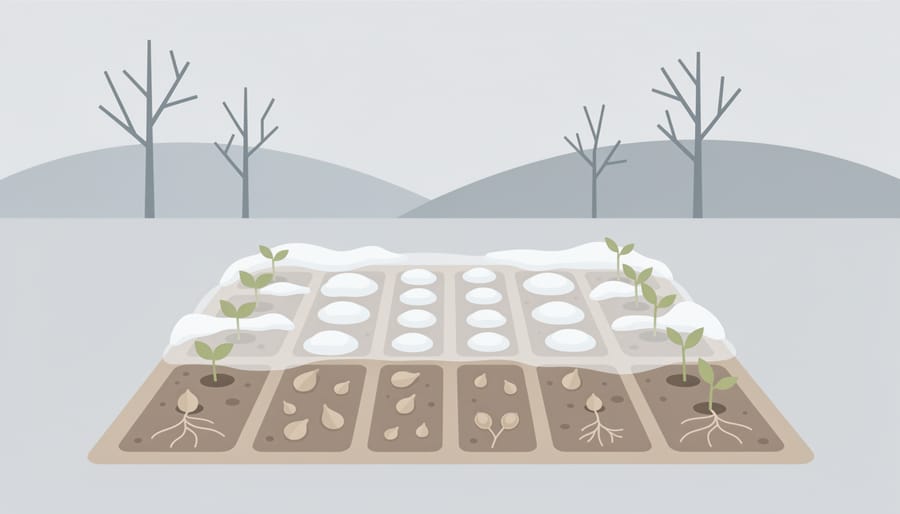
I confess there’s something almost meditative about winter gardening. While December through February might seem like downtime, I’ve learned these months offer gifts that frantic spring never can: unhurried thinking, structural work without guilt about trampling emerging shoots, and those blissfully long evenings with seed catalogues spread across the kitchen table.
The dormant period is perfect for jobs you’d never tackle when everything’s growing. I prune fruit trees and wisteria now, when the bare bones of each plant reveal exactly what needs removing. Without leaves obscuring the structure, you can see crossing branches, awkward angles, and the overall shape you’re working toward. It’s like editing with perfect clarity.
Tool maintenance happens in January at my place. I sharpen secateurs, oil spade handles, clean pots, and sort through half-empty compost bags. Mundane? Perhaps. But starting March with properly functioning equipment rather than rusty blades makes an enormous difference.
Bare-root planting is winter’s secret weapon. From November through March, you can plant dormant trees, shrubs, roses, and hedging plants at a fraction of containerized prices. The soil’s still workable in most UK winters, and plants establish beautifully when they wake in situ come spring. I’ve planted apple trees in February that outperformed summer-planted specimens within a year.
Planning deserves proper time. I keep notes about what thrived, what disappointed, where gaps appeared in summer. Winter lets me plot crop rotations, sketch border redesigns, and order seeds before suppliers run low on popular varieties. There’s genuine pleasure in imagining July’s abundance while frost patterns the windows.
The garden isn’t entirely asleep either. Mild spells offer chances to plant garlic if you missed autumn, spread manure on empty beds, or tackle persistent weeds. Winter jasmine blooms cheerfully, hellebores push through frozen ground, and checking on sleeping plants becomes a gentle ritual rather than an urgent task.
What Shifts the Timing? Regional and Climate Factors
I spent years religiously following calendar dates from gardening books until a bitter late April frost demolished my tender salvia seedlings that I’d dutifully planted “when the books said to”. That painful lesson taught me what my friend and horticulturist Sarah emphasizes constantly: your garden’s postcode matters far more than any printed schedule.
The UK stretches across roughly eight degrees of latitude, and a planting date that works beautifully in Cornwall can spell disaster in the Scottish Highlands. Coastal gardens enjoy the Gulf Stream’s moderating influence, often gaining several frost-free weeks at both ends of the season compared to inland locations. I’ve interviewed gardeners in Truro who regularly plant dahlias in early April, while my Derbyshire garden demands I wait until mid-May. Even within a single region, altitude makes a dramatic difference, every hundred meters of elevation can delay spring by about a week.
Microclimates within your own plot shift timing too. My south-facing wall creates a sheltered pocket where I can push tender perennials out two weeks earlier than in the open garden. Conversely, the frost-prone hollow at the bottom of the slope stays stubbornly cold well into spring. Sarah advises walking your garden with fresh eyes, noting which areas leaf out first, where puddles linger, and where snow melts fastest, these observations reveal your garden’s true personality.
Soil type profoundly affects the “when” of seasonal tasks. Heavy clay holds winter wet and warms slowly, delaying spring planting by weeks compared to sandy or loamy ground. I’ve learned to test readiness by squeezing a handful of soil, if it forms a muddy ball, it’s too wet to work regardless of the date.
The relationship between weather and gardening grows more complex each year, with milder winters punctuated by sudden cold snaps and springs that swing between balmy and bitter. Rather than fighting this unpredictability, I’ve embraced observation over obligation, letting the garden itself tell me when it’s ready.
Following Through: Seasonal Aftercare
I’ve learned the hard way that getting something in the ground is only half the job. A few years back, I planted a gorgeous salvia collection in October, perfect timing, everyone said, but I treated them as “done” and barely checked on them through the winter. Come spring, half had rotted in waterlogged soil I never noticed forming. Now I know that aftercare makes or breaks seasonal success.
After any planting session, I check new specimens twice weekly for the first month. Newly planted trees and shrubs need weekly soaking even in autumn rain, since their limited root systems can’t reach surrounding moisture yet. I learned this from an expert I interviewed who’d lost expensive specimens to drought stress in wet seasons. I now push my finger into the soil a few inches down, if it’s dry there, I water deeply regardless of recent rainfall.
Spring plantings need different attention than autumn ones. Tender perennials and summer bedding planted in May can suddenly wilt in unexpected heat, so I adjust watering daily based on conditions rather than schedule. I’ve started keeping a small notebook in my shed where I jot down what I’ve planted, when, and how it’s responding. Nothing fancy, just “dahlia tubers in west bed, first shoots 14 days” or “new rose struggling, moved to shadier spot week 3.” These notes have saved me from repeating mistakes and help me spot patterns.
Protection matters more than I realized. Newly divided perennials appreciate a handful of mulch to conserve moisture. Autumn-planted bulbs benefit from mesh covers against squirrels, something I discovered after losing an entire tulip planting to persistent raiders. The real secret is staying observant rather than assuming your timing alone guarantees success.
Common Questions About Seasonal Gardening
I get asked these questions all the time, and honestly, they’re the ones I’ve asked myself over years of learning to garden with, not against, the seasons.
Can I still plant if I’ve missed the ideal window?
Usually yes, though you might need to adjust your approach. Autumn-planted trees and shrubs can go in during mild winter spells, spring vegetables often accept early summer sowings for autumn harvest, and many perennials tolerate planting outside their prime season if you’re diligent with watering and aftercare.
How do I know if the soil is warm enough to plant?
The old-fashioned test still works: if the soil feels comfortable when you press your bare hand into it for ten seconds, it’s warm enough for most seeds. For a more precise measure, soil thermometers are inexpensive, 7°C is the threshold for hardy crops, whilst tender vegetables want at least 12°C.
What if the seasons seem to shift from year to year?
They do, increasingly so. Watch your garden’s actual behaviour rather than calendar dates: when do your daffodils emerge, when does the soil dry out enough to work, when arrives the last frost? These signals matter more than traditional timing charts, and keeping simple notes year to year helps you spot your garden’s true patterns.
Does container gardening change seasonal timing?
Containers warm up faster in spring and cool down quicker in autumn, giving you a slightly extended season at both ends. You can start tender plants a week or two earlier and protect pots from early frosts by moving them against the house or into a porch overnight.
The question about moon planting calendars comes up surprisingly often. I’ve never followed them myself, I find watching soil temperature, weather patterns, and plant behaviour gives me all the timing guidance I need. That said, I know gardeners who swear by lunar cycles, and if it helps you stay organized and engaged with your garden’s rhythm, there’s value in that structure.
What matters most is developing a feel for your own patch. Every garden has its quirks, its frost pockets and sun traps, its early corners and late-warming beds. Traditional advice gives you the framework, but your observations fill in the detail.
I’ll be honest: the first year I tried to garden against the seasons, planting what I fancied when it suited me rather than when it suited the plants, I learned more from my failures than any book could teach. That stubborn salvia I shoved in during January just sat there looking miserable until spring warmed the soil. The roses I pruned in autumn put on leggy growth that winter winds promptly shredded.
Now, several years on, I’ve made peace with the calendar. There’s genuine satisfaction in working with the rhythm rather than fighting it. I actually look forward to autumn planting sessions, knowing those salvias will establish strong roots over winter and burst into life come spring. Spring pruning feels purposeful rather than panicked. Even winter’s quiet planning time has become one of my favorite parts of the year.
Your garden will teach you its own timing if you pay attention. Notice when the soil warms in your patch, when your local frosts typically arrive, how your plants respond to each season’s shift. Take notes, make mistakes, adjust accordingly. The beauty of seasonal gardening isn’t perfection, it’s participation in something larger than our to-do lists.
I’d love to hear how the seasons shape your gardening. What’s your favorite time of year in the garden? Which seasonal task brings you the most joy or drives you slightly mad? Drop a comment below and let’s swap stories.