The USDA gardening zones map is an American plant hardiness system that keeps appearing in UK gardening searches because most online plant advice originates from the United States. While it’s useful to understand what those numbered zones mean when you encounter them, British gardeners should rely on the RHS hardiness ratings instead, which account for our maritime climate, milder winters, and crucially, our summer temperatures and rainfall patterns that the USDA system completely ignores.
I stumbled into this confusion myself three years ago when I ordered what I thought were perfect perennials for my Somerset garden, only to discover the supplier’s zone recommendations were utterly useless for predicting how they’d perform in our damp, mild conditions. The plants that should have thrived based on their USDA Zone 8 rating sulked through our soggy winter, whilst others marked for colder zones flourished.
The 2023 USDA map update sparked renewed interest in these zones, and I’ve noticed more British gardeners asking whether they should pay attention to them. The short answer is that USDA zones measure only average annual minimum temperatures, creating a scale from Zone 1 (below -51°C) to Zone 13 (above 15°C). Most of the UK falls into Zones 8 or 9, which sounds straightforward until you realise this tells you nothing about our summer heat, humidity, day length, or winter wet.
Many experienced British gardeners already know that treating USDA zones as gospel here is a recipe for disappointment. A plant thriving in USDA Zone 8 California faces entirely different growing conditions than one in Zone 8 Devon, despite sharing the same minimum winter temperature. Understanding both systems helps decode American gardening resources whilst making informed decisions for your actual growing conditions.
What the USDA Plant Hardiness Zone Map Actually Is
The USDA Plant Hardiness Zone Map is essentially a color-coded temperature guide that tells American gardeners which plants can survive winter in their area. At its core, it’s surprisingly straightforward: researchers looked at decades of weather data and calculated the average annual extreme minimum winter temperature for every location across the United States. Not the coldest day on record, mind you, but the coldest temperature a typical winter might bring.
The map divides the entire country into zones based on these minimum temperatures, using 10-degree Fahrenheit increments. Zone 1 represents the coldest areas where winter temperatures plunge below -50°F, while Zone 13 covers tropical regions that never drop below 60°F. Each of these zones is then split into two half zones, labeled ‘a’ and ‘b’, representing 5-degree F intervals, giving gardeners more precise guidance.
The system works because many perennial plants have a threshold cold temperature below which they simply won’t survive, regardless of how well you mulch them or where you plant them. If a plant tag says “hardy to Zone 5,” it’s telling you the plant can typically survive winter lows down to around -20°F.
The current map is the 2023 edition, which updated the previous 2012 version. I remember when that update was released, it shifted many areas into warmer zones, which sparked considerable discussion about climate change among the gardening community. The new map uses more weather stations and finer geographic detail than its predecessor, making it more accurate than ever for American gardeners trying to choose plants that will survive their winters.
Why UK Gardeners Keep Running Into USDA Zones
I can’t count the number of times I’ve been halfway through reading a glowing plant review only to realize the author is writing from Tennessee or Oregon. Last autumn, I ordered what I thought was a perfect climbing rose from a specialist nursery, only to discover upon arrival that the care instructions were entirely in USDA zones. The label cheerfully declared it hardy to zone 5, which meant absolutely nothing to my Cotswolds garden.
This happens because American resources utterly dominate online gardening content. The sheer scale of the US market means more nurseries, more gardening websites, more YouTube channels, and more plant databases, all speaking in USDA zones. When you search for almost any plant, the top results will likely reference this system. Even international seed companies and European nurseries often include USDA ratings because they’re exporting to American customers or simply following what’s become the default language of plant hardiness.
The internet hasn’t made gardening advice more local, it’s made it more American. That’s not necessarily bad, there’s wonderful knowledge to glean, but it does require us to become translators, constantly converting information that wasn’t designed for our climate.
The Problem With Using USDA Zones in British Gardens
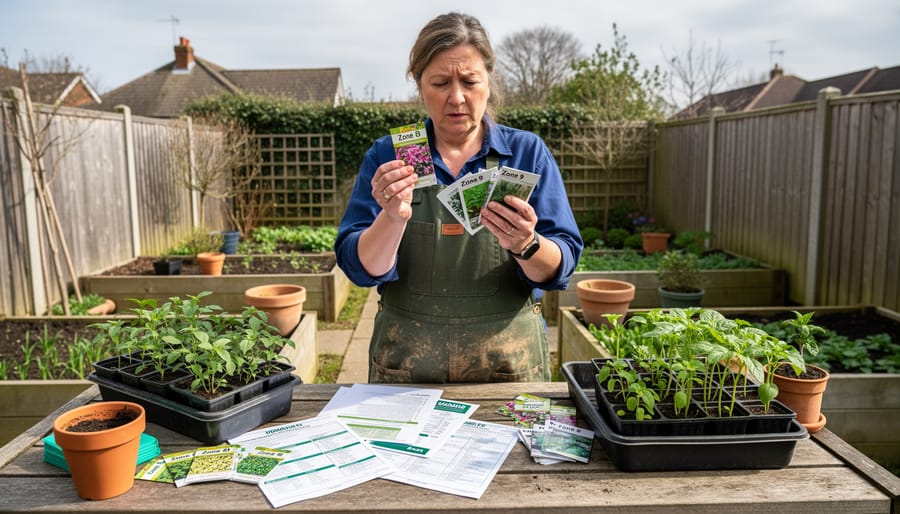
I learned this lesson the hard way with a beautiful Japanese maple. According to its label, it was hardy to USDA Zone 6, and my Cotswolds garden sits comfortably in Zone 8 equivalent. Should’ve been perfect. Instead, I watched it struggle through three soggy winters before finally giving up the ghost. The problem wasn’t cold, it was wet.
That’s the fundamental issue with applying USDA zones to British gardens: they measure only one thing, average annual extreme minimum winter temperature, when our climate throws far more complex challenges at plants. USDA zones tell you how cold it gets, but they don’t tell you it stays cold and dry. In the States, a Zone 6 winter might mean minus ten Celsius with snow cover protecting roots, followed by proper frozen ground. Here, we get endless cycles of mild spells and frost, rain upon rain upon rain, and soil that never truly freezes or drains.
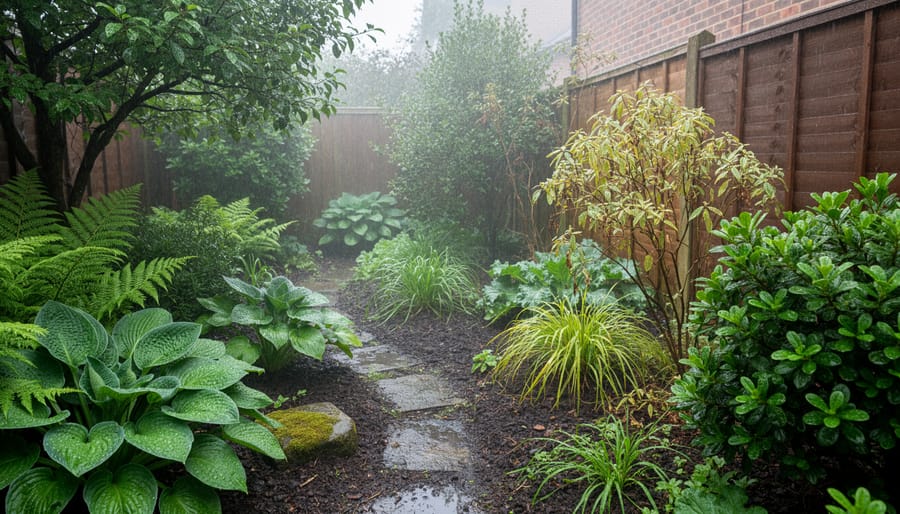
My Japanese maple could handle the cold just fine. What it couldn’t handle was sitting in waterlogged clay through December, January, and February, its roots slowly rotting in our mild, perpetually damp conditions. That’s a problem the USDA system simply doesn’t account for.
Then there’s summer heat, or rather our lack of it. Many American perennials evolved for continental climates where summer days are reliably hot and sunny. Plants rated for USDA zones similar to ours might need consistent warmth we rarely provide. I’ve had North American natives sulk through our grey Julys, never quite achieving the growth their labels promised, while trying to work out how to water in heat during our occasional scorchers confused them further.
Day length compounds the problem. We sit much farther north than most American growing regions. Our summer days stretch gloriously long, wonderful for some plants, but confusing for others adapted to shorter photoperiods. Some species trigger flowering or dormancy based on day length, not just temperature, making zone equivalents misleading at best.
The USDA map gives you a single data point when you need a complete picture. It’s like knowing someone’s height but nothing about their build, personality, or habits, then trying to buy them clothes. Sometimes you’ll get lucky. Often, you won’t.
What UK Gardeners Should Use Instead
After wrestling with American zone maps for years, I’ve come to rely almost exclusively on the Royal Horticultural Society’s Hardiness Rating system, and it’s transformed how I choose plants for my own garden.
The RHS system feels like it was designed by people who actually understand our weather. Instead of focusing solely on winter minimum temperatures, RHS hardiness ratings acknowledge the complexity of British growing conditions. The ratings run from H1a (heated greenhouse only) through to H7 (hardy in the severest British conditions), giving you a much clearer picture of what will actually survive in your garden. Most outdoor perennials fall between H4 and H6, which covers everything from plants needing winter protection to those that laugh in the face of a February frost.
What I appreciate most is how these ratings account for our peculiar climate. A plant rated H4 might tolerate temperatures down to -5°C but struggles with our wet winters, something the USDA system completely misses. When I’m selecting plants now, I automatically look for the RHS rating first, then consider my specific microclimate, whether I’m planting in open ground or trying container gardening where I can move things under cover.
Here’s a rough comparison to help orient yourself:
| USDA Zone | Approx. UK Equivalent | RHS Rating | Example UK Locations |
|---|---|---|---|
| 8a-8b | Mild coastal areas | H5-H6 | Cornwall, South Devon |
| 8b-9a | Sheltered gardens | H4-H5 | London, South East |
| 7a-7b | Most of UK | H5-H6 | Midlands, North England |
| 6a-6b | Cold inland areas | H6-H7 | Scottish Highlands |
The RHS website provides detailed hardiness information for thousands of plants, and most reputable UK nurseries now include RHS ratings on their labels. I keep a small notebook with ratings for my favorite perennials, which saves endless phone searches when I’m at the garden center.
When you’re stuck with only USDA information, perhaps ordering something unusual from abroad, use it as a starting point but verify against UK growing experiences. Online forums and regional gardening groups have proven invaluable for this reality check.
How to Translate USDA Zones When You Have No Choice
I’ll confess, I’ve become rather adept at this zone translation dance. Last autumn, I fell completely in love with a rare Penstemon variety offered by a specialist nursery in Oregon. The listing simply said “Zone 5-8” with no further guidance, and I faced a choice: walk away from a plant I desperately wanted, or learn to translate.
Here’s what I’ve found actually works. Start by looking up the USDA zone, then immediately cross-reference with UK gardeners who’ve already grown that plant. I search forums, Instagram hashtags with the plant name plus “UK”, and nursery reviews. Real experience trumps zone conversions every time.
When that’s not possible, I apply what I call the “conservative shift.” If a plant is listed as hardy to USDA Zone 7 (around 0 to 5°F minimum), I assume it might struggle in my southern England garden despite the temperature match, because our Zone 7 equivalent brings months of damp cold rather than crisp, dry freezes. I then create better conditions: I group pots near a south-facing wall for winter, or I improve soil drainage dramatically with grit.
I also pay attention to summer heat requirements. Many American perennials need sustained warmth we simply don’t get. If a plant thrives in USDA Zone 7 but originates from hot-summer regions, it might sulk in our cooler British summers regardless of winter survival.
The Penstemon, incidentally, has flourished for two years now, tucked against my sunniest wall with excellent drainage.
After years of puzzling over USDA zones while nurturing my British garden, I’ve come to see them as a useful reference point rather than gospel truth. The American system offers a starting point when you’re ordering from overseas nurseries or decoding international gardening forums, but it simply cannot capture the complexity of our maritime climate with its mild, soggy winters and temperamental summers. I’ve learned to treat USDA zones as one piece of information among many, never the sole deciding factor.
The real wisdom lies in prioritizing UK-specific resources. The RHS Hardiness Ratings, advice from local nurseries, and guidance from gardeners in your region will serve you far better than any temperature-based zone map developed thousands of miles away. When I stopped trying to force American advice onto my Lancashire garden and started listening to what worked here, my success rate improved dramatically.
That said, understanding USDA zones has its place. When a rare American perennial catches your eye or you’re browsing international plant forums, knowing how to interpret those zone numbers helps you make informed decisions. The trick is combining that knowledge with local expertise and, most importantly, your own observations.
I’d love to hear your experiences. Have you been confused by zone mismatches? Found surprising successes or disappointing failures? Gardening thrives on shared knowledge and happy accidents. Sometimes the plants that shouldn’t work according to any system become our greatest triumphs, reminding us that gardening is as much art as science.