Start your plot plan on paper in January, mapping out which beds will hold brassicas, legumes, and root crops based on last year’s rotation. I learned this the hard way after planting potatoes in the same corner three years running and wondering why my yields kept shrinking. A simple sketch with coloured pencils saves you from repeating my mistakes.
Measure your actual growing space before getting carried away with seed catalogues. Last winter, I sat with my tape measure and notebook, documenting how many hours of direct sun each section received. That’s when I discovered my “sunny” south-facing bed was actually shaded by next door’s fence after 2pm. The kale I’d planned for that spot went elsewhere, and I planted shade-tolerant salads instead.
Talk to other gardeners about what thrives in your specific microclimate. When I chatted with three allotment holders at my local garden centre, they all warned me off outdoor tomatoes in our exposed northern valley. I planted them in pots near the house wall instead, and actually got ripe fruit in August.
Choose varieties that match your eating habits, not just pretty catalogue photos. My neighbour grew twelve courgette plants her first year because they looked magnificent on paper. She was giving away carrier bags of them by July, slightly desperate. Meanwhile, I’d planted just three and still had more than we could manage.
Reserve space for successional sowings rather than planting everything at once. I mark out sections for three separate lettuce plantings in my spring plan, two weeks apart. This stops us from facing that familiar feast-or-famine problem where you’re eating salad three times daily or watching it bolt.
The real secret? Planning shouldn’t feel like homework. It’s permission to dream about summer harvests while winter rain hammers the windows, seed packets spread across the kitchen table, mug of tea going cold.
The Planning Problems We All Face (And Why We Don’t Need to Face Them Alone)
I’ll never forget the spring I planted my entire brassica family in the same bed where clubroot had been quietly festering the year before. Within weeks, my cabbages were stunted, the cauliflowers never formed heads, and I’d wasted precious growing time. A quick chat with my neighbour over the fence would have saved me that heartbreak. She’d been rotating her brassicas for years and knew exactly which beds to avoid.
That’s the thing about vegetable garden planning. Even those of us who’ve been growing for decades can find ourselves tangled in complications. Crop rotation strategies that made perfect sense in theory become baffling when you’re trying to remember what grew where three years ago. Understanding crop rotation in vegetable gardens requires tracking families, soil needs, and disease pressures simultaneously.
Then there’s timing. Should you sow those runner beans in May or wait until June? The question keeps you awake at night, especially when planting based on frost dates varies so wildly across regions. What works in Cornwall might spell disaster in Cumbria.
Add in space limitations and the paralysis really sets in. You’ve got four raised beds and forty varieties you’d love to try. The seed catalogues arrive in January like siren calls, each description more enticing than the last. Heritage tomatoes or modern blight-resistant varieties? Bush beans or climbing? Do you really need three types of kale?
I spoke with Sarah Mitchell, head gardener at RHS Wisley, about this universal struggle. “I see it constantly,” she told me. “People think they should know it all before they start. But gardening is collaborative by nature. We all learn from each other’s mistakes and successes.”
She’s absolutely right. The most confident gardeners I know are the ones who ask questions freely, share their disasters alongside their triumphs, and tap into collective wisdom rather than struggling alone with their planning dilemmas.
Where Your Gardening Community Actually Lives
Local Allotment Societies and Garden Clubs
I’ll never forget my first visit to the Oakwood Allotment Society on a drizzly Saturday morning in March. I’d been planning my vegetable patch for weeks, poring over seed catalogues and garden books, but I was utterly paralysed by indecision. Should I start tomatoes indoors? Would carrots thrive in my heavy clay? A neighbour suggested I pop down to the allotments, and I’m so glad I did.
The moment I stepped through the gate, I was struck by how generous people were with their knowledge. Within ten minutes, I’d learned that courgettes absolutely romp away in our particular corner of Kent, that blackfly arrive like clockwork in mid-May, and that our soil conditions respond brilliantly to well-rotted manure from a local farm. This wasn’t generic advice from a gardening manual. It was battle-tested wisdom from people who’d been growing vegetables in precisely the same microclimate for decades.
What surprised me most was how welcoming everyone was, even to a bumbling newcomer clutching a crumpled notebook. I’d worried about interrupting busy gardeners, but most were delighted to chat. One chap named Dennis showed me his rotation system and explained how microclimates affect vegetable growth even within a single plot, pointing out his sheltered south-facing bed where he starts early salads.
If you’re shy about approaching groups, remember that gardeners love talking about gardening. Start by attending an open day or public event rather than turning up unannounced. Bring specific questions. Most societies have Facebook pages where you can introduce yourself beforehand, which makes that first visit far less daunting.
Online Forums and Social Media Groups
I’ll never forget the January evening I spent scrolling through Gardeners’ World Magazine Forum at 11pm, fretting over whether my raised bed layout would leave my courgettes shading out the carrots. Within twenty minutes, three fellow gardeners had chimed in with advice, a hand-drawn diagram, and the reassurance that I was overthinking it. That’s the magic of online gardening communities.
The UK has a vibrant network of digital spaces where vegetable growers congregate. The Grow Your Own forum on GardenersWorld.com remains consistently active, with threads covering everything from crop rotation queries to slugs-ate-my-seedlings commiseration. Facebook groups like UK Vegetable Gardeners and Allotment Growers UK boast thousands of members who’ll cheerfully critique your plot plan or suggest companion planting combinations you’d never considered.
Reddit’s r/GardeningUK skews younger and offers a refreshingly informal atmosphere. I’ve seen brilliant discussions there about small-space planning that really helped me rethink my own compact garden. Instagram, meanwhile, serves up endless inspiration through hashtags like #UKVegGarden and #AllotmentLife, though you’ll need to dig past the perfectly styled photos to find the practical planning wisdom.
The beauty of these spaces lies in their diversity. You’ll get perspectives from a retired teacher in Cornwall, a flat-dweller in Manchester with a balcony garden, and someone managing a full allotment in Edinburgh. Real experience from real climates.
But there’s a flip side. Ask a simple question about spacing beetroot and you might receive seventeen conflicting answers, each delivered with absolute certainty. Information overload becomes genuine, especially for beginners trying to separate sound advice from well-meaning but misguided suggestions. I’ve learned to look for consensus rather than taking the first response as gospel, and to cross-reference what I read online with trusted sources before making major planning decisions.
Garden Centers and Nursery Staff
I learned this lesson the hard way last March when I marched into my local nursery clutching a meticulously planned layout for fourteen courgette plants. The woman at the counter, Linda, took one look at my diagram and said, “You’ve got a family of four, right? You’ll be drowning in courgettes by July with that many.” She was spot on. We scaled back to six plants, and I still ended up leaving bags of them on neighbours’ doorsteps.
That conversation taught me that nursery staff see hundreds of gardens every season. They know what thrives locally, which varieties actually produce well in our particular climate, and crucially, which mistakes everyone makes. Their knowledge isn’t theoretical. It’s built on years of customers returning with tales of triumph and disaster.
The trick is approaching them at the right time. Early weekday mornings are ideal. Avoid Saturday afternoons when they’re run off their feet. I always start by explaining what I’m trying to achieve rather than just asking “What should I plant?” Tell them about your soil type, how much sun you get, whether you’ve got children who might actually eat what you grow.
Ask about varieties they’ve personally grown or that customers rave about. “Which tomatoes do best in containers here?” gets better answers than vague queries. Don’t be shy about mentioning past failures, either. When I confessed my carrots always fork terribly, Linda pointed out our heavy clay soil and suggested raised beds with imported compost.
These conversations have transformed my garden far more than any book ever did.
Gardening Workshops and Open Garden Events
There’s something wonderfully inspiring about stepping into someone else’s vegetable garden. I’ll never forget my first open garden visit in Sussex, where I stood in front of a perfectly trained cordon of tomatoes and thought, “So that’s how you do it!” No amount of reading had quite prepared me for seeing the technique in three dimensions.
Open garden days offer insights you simply can’t get from books or online tutorials. You can observe how people deal with awkward slopes, where they’ve positioned their compost bins (and whether they regret it), and which companion planting combinations actually work rather than just looking pretty in theory. I always carry a small notebook and jot down measurements. How wide are those paths, really? How much room has she left between those courgette plants?
Don’t be shy about asking questions. Most gardeners offering open days are genuinely thrilled to share what they’ve learned. I make a point of asking about failures too. “What didn’t work this year?” often yields the most valuable information.
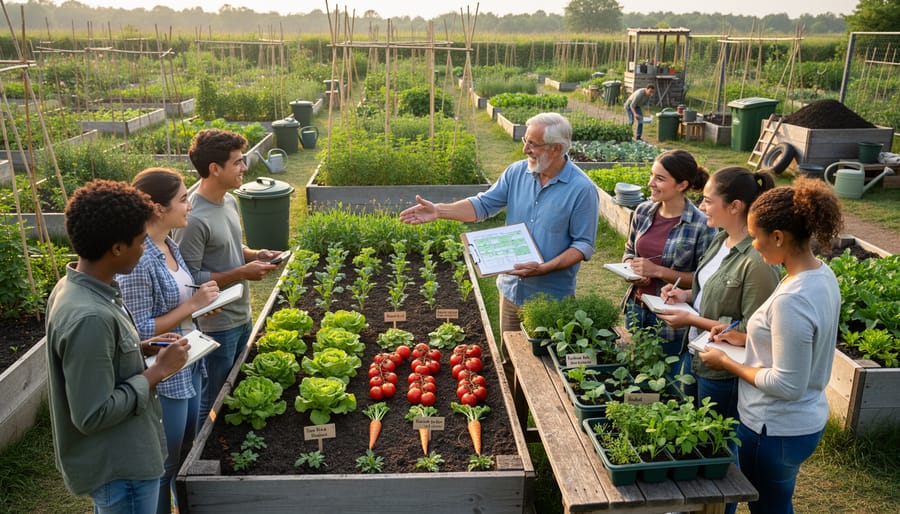
Workshops take this further by providing structured learning. Last spring, I attended a crop rotation workshop at a community garden in Hertfordshire where the instructor, a former commercial grower, walked us through her actual planning spreadsheet. We all left with a template and, crucially, contact details for three new gardening friends who were wrestling with identical challenges.
That networking aspect matters more than people realise. My workshop buddy Sarah and I still swap seedlings and compare notes every season. Sometimes the best planning tool is a friend who’ll tell you honestly that your lettuce spacing is bonkers.
How to Actually Get Planning Help (Not Just Gardening Chat)
Asking Questions That Get Useful Answers
I learned this lesson the hard way three years ago when I posted “How do I grow tomatoes?” in a Facebook gardening group. The responses ranged from unhelpful (“Just plant them”) to overwhelmingly detailed essays about heritage varieties I’d never heard of. Nobody knew I was working with a shady north-facing balcony in Manchester, and I certainly didn’t get the simple guidance I desperately needed.
The difference between a question that sparks useful discussion and one that gets ignored or misunderstood usually comes down to three elements: context, specificity, and what you’ve already tried.
Context is everything. Sarah Raven once told me during an interview that she could give entirely different advice to two people asking the identical question, depending on their circumstances. Your soil type, available space, whether you’re in Cornwall or the Highlands, your experience level, these all shape what advice will actually work for you. When I started including “I’ve got heavy clay soil in zone 8b, about 3×4 metres of space” in my questions, the responses became immediately more practical.
Specificity matters too. “What should I plant?” is unanswerable. “I want to grow salad leaves for cutting from March through October, what varieties would you succession sow?” gives people something concrete to respond to.
Here’s what the transformation looks like in practice:
| Instead of asking this | Ask this |
|---|---|
| How do I plan my garden? | I’m planning my first 2x3m raised bed in Brighton. I want year-round veg for two people. Where should I start with crop rotation? |
| What grows well together? | I’m planting courgettes and runner beans together. Will the beans shade out the courgettes, or is this combination fine? |
| When should I plant? | I want to direct sow carrots in Surrey. The packet says March, but my soil is still waterlogged. Should I wait or start in modules? |
Notice how the effective questions paint a picture? They give responders enough information to imagine your actual situation.
Finally, share what you’ve already considered or researched. “I’ve read that broad beans fix nitrogen, but I’m confused about whether I should still add compost” shows you’re engaged and helps people pitch their answers at the right level. You’ll get explanations rather than just links to Google.
I’ve watched this approach work magic in my local allotment association forum. The gardeners who ask rich, detailed questions build relationships quickly and get invited to visit plots, swap seeds, even collaborate on sharing greenhouse space.
Giving Back: Why Sharing Your Plans Benefits Everyone
I’ll confess something that surprised me last February. I posted a rough sketch of my planned bed rotations on our local Facebook gardening group, half apologising for being “still learning all this”. Within an hour, I had eleven comments. Some pointed out I’d squeezed too many courgettes into one patch (guilty). Others suggested companion plantings I hadn’t considered. But here’s what caught me off guard: three people messaged privately thanking me for sharing, saying they’d been too intimidated to post their own plans.
That’s when I realised something. We spend so much time seeking advice from experts that we forget our own fumbling attempts are valuable to someone else. The person one step behind you on the gardening journey learns more from your mistakes than from a perfectly executed plan.
I spoke with Sarah Drummond, who runs community plot workshops in Edinburgh, about this phenomenon. “Every time someone shares their thought process, not just their results, it creates a learning moment,” she told me. “Even experienced gardeners benefit because it prompts them to articulate why they do things a certain way.”
Now I deliberately share my planning spreadsheets, wonky diagrams and all. The act of explaining my reasoning to others forces me to question it. Why am I putting tomatoes there? Do I actually have time for that many climbing beans? Sometimes typing out “I’m planning to…” makes you realise the flaw before you’ve wasted the seed packet.
Your half-formed plans aren’t embarrassing. They’re generous.
Planning Together: Collaborative Approaches That Work
Seed and Plant Swaps for Variety Planning
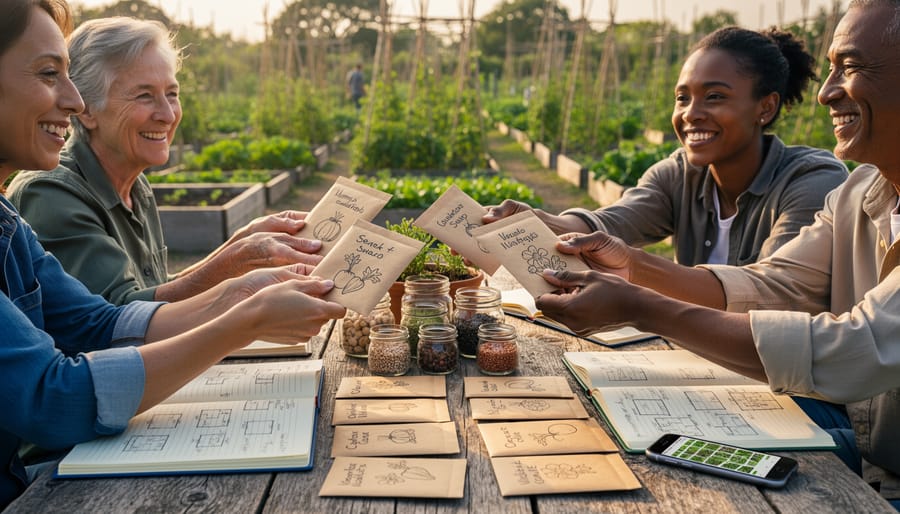
I stumbled into my first seed swap three years ago at our village hall, clutching a handful of saved tomato seeds and feeling rather out of my depth. Within twenty minutes, I’d walked away with ‘Carlin’ peas (which I’d never heard of), a curious purple-podded climbing bean, and the beginnings of a genuine friendship with Margaret, who’s been growing vegetables for forty years. More importantly, I left with ideas I hadn’t even considered for my spring planting.
That’s the real magic of seed swaps. They force planning conversations naturally. When someone hands you a packet of seeds, you ask questions: when should I sow these? Do they need protection? How much space? Suddenly you’re sketching out your bed layouts together, comparing notes on succession planting, and realizing that peculiar heirloom variety might slot perfectly into that awkward shady corner you’d written off.
The ‘Carlin’ peas, incidentally, turned out to be exceptional. Hardy as anything, productive, and with a flavour that made my usual varieties seem rather bland. I’d never have discovered them through a catalogue.
If you’re keen to join a swap, check local gardening clubs, community gardens, or library noticeboards. Many run annual events in January or February, perfect timing for seed starting. Bring clearly labelled seeds (variety name and year saved matter), a list of what you’re offering, and genuine curiosity. If there’s nothing nearby, consider organizing one. A Facebook event and borrowed church hall are enough to start.
The planning insights you gain from chatting with actual growers beats any amount of solitary catalogue browsing.
Plot Tours and Garden Walks
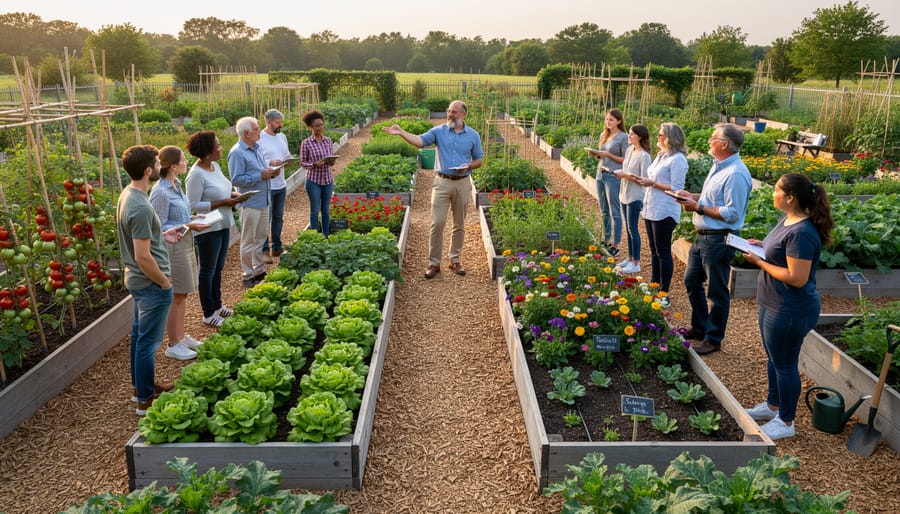
There’s something profoundly clarifying about standing in someone else’s vegetable garden. Last March, I visited my neighbour Susan’s plot and immediately understood why her courgettes always outperformed mine. She’d positioned them where they caught morning sun but had afternoon shade from her runner bean wigwams. No amount of reading could have made that connection as vivid as seeing the actual layout.
I’ve learned to arrange informal garden visits during planning season, usually February through early April. Most gardeners are delighted to show off their space, and you’d be surprised how generous people become when you express genuine interest in what they’ve created. I always bring a notebook and my phone for photos, though I ask permission first.
What should you look for? Start with the basics: crop placement relative to sun exposure, spacing between rows, and vertical growing structures. Notice what’s thriving and what’s struggling. I once visited a garden where the gardener had cleverly tucked salad crops beneath their sweetcorn, creating a living shade system.
The questions matter enormously. I always ask: “What would you do differently next year?” and “What surprised you about this layout?” These prompt honest reflections rather than polished advice. When Tom from my allotment site admitted he’d planted his brassicas too close to walnuts and paid the price, it saved me from repeating his mistake.
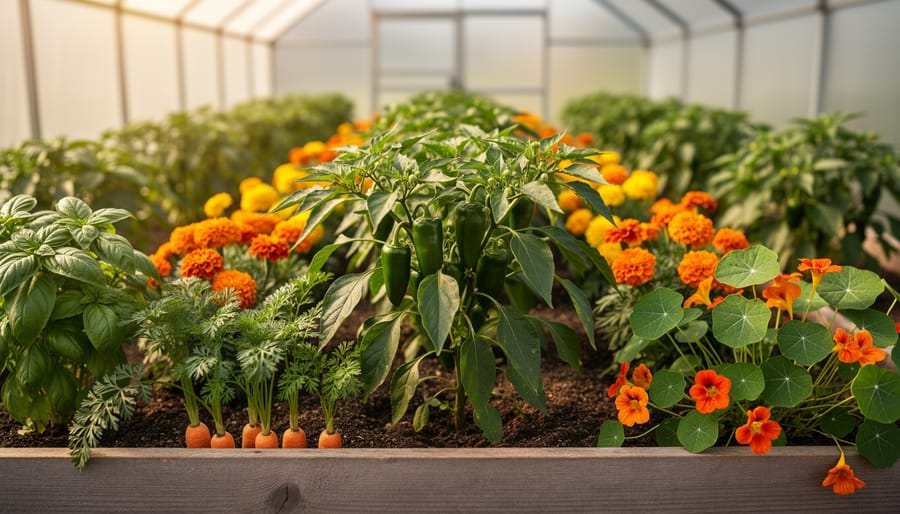
The real value in these visits is seeing decisions play out in three dimensions. Books can tell you about companion planting, but watching how someone actually integrates marigolds among their tomatoes makes it click. You’ll spot ingenious solutions to problems you haven’t even encountered yet.
Shared Growing Calendars and Planning Documents
I stumbled across my first shared garden spreadsheet three years ago when someone in our local allotment Facebook group posted a link to a Google Doc. I clicked expecting something basic, but found a beautifully organised template with recommended varieties, sowing dates adjusted for our northern climate, and notes about which seeds had performed well the previous summer. It felt like discovering a secret blueprint.
These collaborative planting calendars have become surprisingly popular. Many communities now maintain living documents that anyone can contribute to, building up collective wisdom about what works in specific regions. I spoke with Margaret, who manages a community garden in Hampshire, and she told me their shared spreadsheet saves new members months of trial and error. “We include frost dates, succession planting schedules, even reminders about when to order particular seed varieties that sell out quickly,” she explained.
The beauty of these documents is their flexibility. Some groups create simple monthly checklists, whilst others develop elaborate colour-coded planners tracking crop rotation across multiple beds. I’ve borrowed timing suggestions from three different spreadsheets this season, tweaking them for my clay soil and shady corners. Having that framework removes so much of the overwhelm that comes with planning from scratch.
Learning from Community Wisdom: What to Listen For
I’ll admit, when I first started joining online gardening groups, I felt overwhelmed by the sheer volume of advice. Everyone had strong opinions about spacing, succession planting, and whether to grow from seed or transplants. The trick, I’ve learned, is knowing what to actually listen for.
I spoke with Sarah Mitchell, who coordinates three community gardens across Somerset, about how to filter community wisdom effectively. “The advice that really matters,” she told me, “is usually rooted in local specifics rather than universal rules. When someone says ‘this variety failed miserably in our clay soil’ or ‘we always plant our beans a fortnight later than the packet says,’ that’s gold. They’re giving you tested knowledge about your actual growing conditions.”
She’s absolutely right. I’ve found the most valuable insights come with context: actual results from gardens nearby, timing that accounts for regional weather patterns, and honest accounts of failures alongside successes. When someone shares a detailed crop rotation plan that worked in their Bristol allotment, that’s far more useful than generic advice about companion planting from someone across the Atlantic.
Sarah suggests asking specific questions rather than broad ones. “Instead of ‘what should I plant?’, try ‘has anyone successfully grown courgettes in partial shade in Manchester?’ You’ll get targeted responses from people dealing with similar constraints.”
I’ve also learned to watch for patterns. If three different gardeners mention that slugs destroyed their lettuce in June, I pay attention. But if advice conflicts, I consider the source. Has this person actually grown vegetables in similar conditions, or are they repeating something they read?
The real wisdom often comes from experienced gardeners who acknowledge variables. They’ll say “this worked for me, but your mileage may vary” rather than presenting their method as the only way. That humility usually signals reliable advice worth incorporating into your planning.
My Vegetable Garden Planning Ritual (Community Edition)
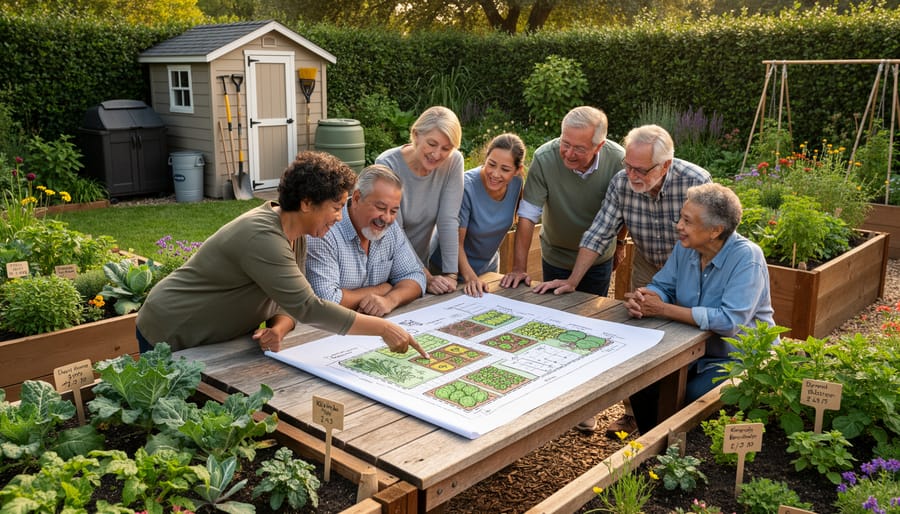
I’ll confess, my vegetable garden planning used to be a solitary affair. I’d hunker down with seed catalogues in January, feeling simultaneously excited and overwhelmed, trying to remember what worked last year whilst battling optimism about how much I could actually grow. Now? It’s transformed into something far more collaborative, and honestly, much more enjoyable.
It starts in those dark winter months when I’m scrolling through the GardenersWorld forum with a cup of tea. I used to lurk without posting, but last year I finally shared my bewildering first attempt at crop rotation and received genuinely helpful advice within hours. Someone called Margaret from Cheshire even sent me her simple three-year plan, which I’ve adapted for my own beds. That online connection broke the ice for me.
By February, I’ve moved from digital dreaming to actual planning, and here’s where community support really slots in at each stage:
- Initial seed selection: I post my shortlist to local Facebook gardening groups, asking what thrives in our specific microclimate. Last year, three people warned me off aubergines in our draughty valley, saving me both money and disappointment.
- Layout planning: I sketch my beds and share photos at the garden centre. The staff there have seen hundreds of plots, and they spotted immediately that I’d crammed too many courgettes into one corner.
- Spring planting decisions: I chat with my allotment neighbors about timing. Derek three plots down has been growing here for twenty years and knows exactly when our last frost typically arrives, something no app can tell me.
- Mid-season adjustments: When my beans looked poorly in June, I texted a photo to the WhatsApp group I’d joined. Within an hour, someone identified nitrogen deficiency and recommended a specific organic feed.
The transformation wasn’t overnight. I had to get comfortable asking what felt like basic questions. But I spoke with Helen Chen, a community garden coordinator in Bristol, who told me something liberating: “Everyone’s garden is unique. Your basic question might solve someone else’s complex problem once you share what worked.”
That perspective shifted everything. Now my planning notebook includes a section specifically for community wisdom, little notes like “Ask Patricia about successional sowing” or “Check forum for companion planting suggestions.” Planning isn’t something I finish alone in March anymore. It’s an ongoing conversation that runs right through the growing season, making me a better gardener with every exchange.
I spent an hour last weekend chatting with Margaret, a retired teacher who grows enough vegetables to feed half her street. She told me something that’s stayed with me: “I’ve been gardening for forty years, and I still learn something new every season. Usually from someone who’s only just started.”
That’s the beautiful truth about planning a vegetable garden. None of us has it all figured out, and we’re not meant to. The plot you design this winter will reflect your taste, your soil, your microclimate, your schedule. No book or expert can hand you a perfect template because your garden is uniquely yours. But goodness, how much richer your plan becomes when you’ve bounced ideas off someone who’s tried runner beans where you’re considering squash, or who’s discovered that your supposedly “difficult” clay soil grows the most magnificent parsnips.
Planning isn’t about copying someone else’s layout or following rigid rules. It’s about gathering up all those fragments of wisdom, those little shortcuts and cautionary tales, and weaving them into something that works for you. That twenty-minute conversation at the garden centre. That forum thread you stumbled across at midnight. Your neighbour’s offhand comment about companion planting. They all add up.
So here’s my invitation: share what you’re planning this year. Tell us what’s worked, what’s flopped spectacularly, what you’re puzzling over. Ask the question that feels too simple. Because somewhere in the Great Gardens UK community, there’s someone who needs to hear exactly what you have to say. We all have something to teach and something to learn. That’s how gardens grow, and gardeners too.